 Skip to content
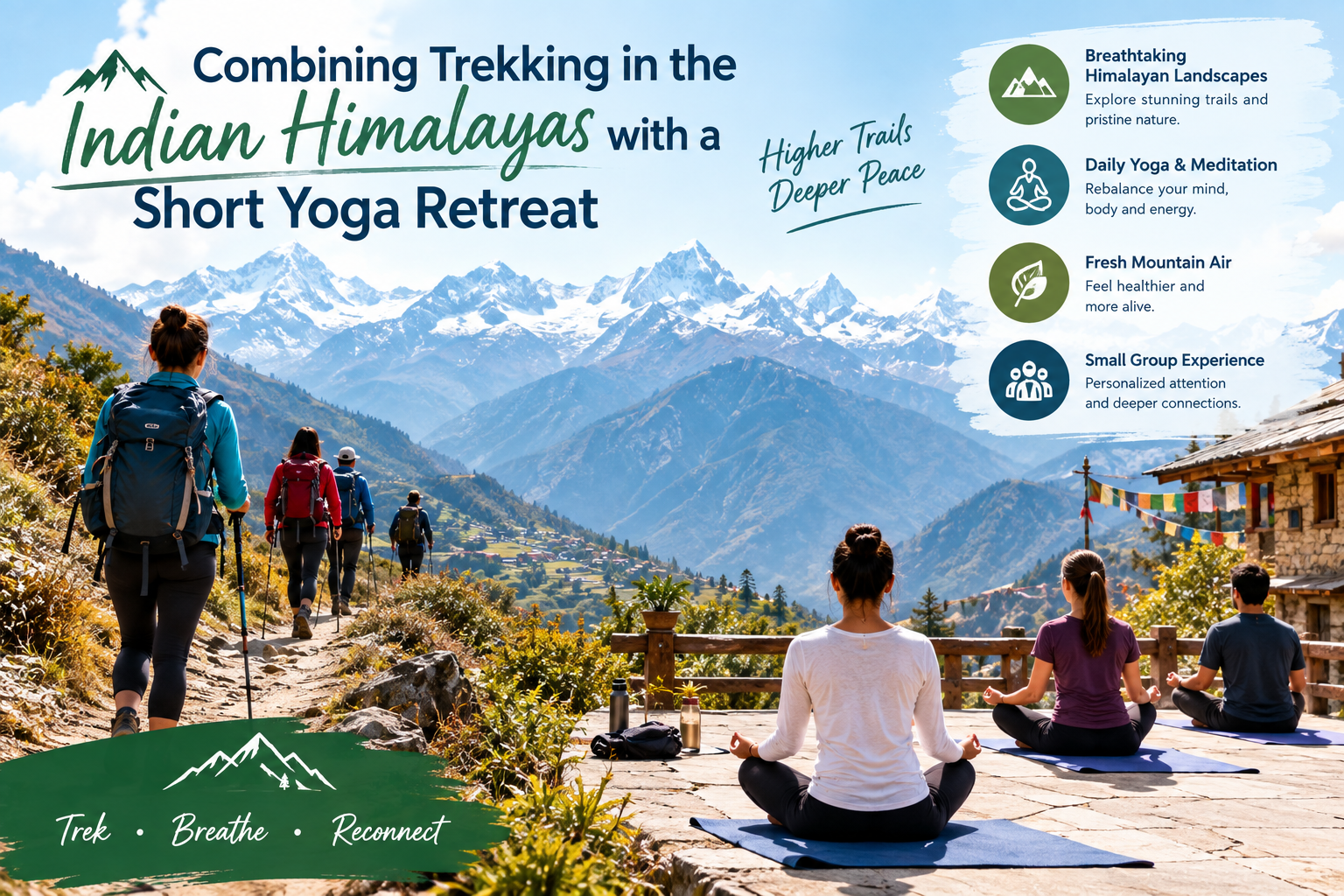
A practical, honest guide for travellers who want mountain views and a calmer mind, and who are wondering how to plan a Himalayan trek and a short yoga retreat into one safe, well-paced trip.
There is a particular kind of tiredness that a holiday on the beach does not fix. It is the fatigue of long screen hours, packed calendars and constant noise. Many travellers respond by looking to the mountains, where the days are simple and the horizon is wide. Others look to yoga, where the day is structured around breath and stillness. Combining the two is becoming a popular way to travel in India.
A trek in the Indian Himalayas gives you fresh air, movement and a sense of scale. A short yoga retreat gives you rest, routine and tools for calming the mind. Done thoughtfully, each supports the other. Done carelessly, they can leave you with sore knees, altitude headaches and a rushed itinerary. This guide explains how to combine them sensibly, from choosing a trek and a season to preparing your body and recovering afterwards. Conditions, permits, prices and trail rules change, so treat the details as a starting point and confirm them with your operator before you travel.
1. Why Pair a Trek With a Yoga Retreat
Trekking is physically demanding, and a retreat is restorative. Placing them in one trip means the effort of the mountains is balanced by deliberate rest. Many people find that the retreat also gives them a chance to slow down before or after the physical push, so the holiday feels less like a race.
The pairing also suits different types of traveller. Active people who tend to over-schedule get a built-in reason to pause, and people new to yoga get an outdoor context that makes the practice feel natural. Neither activity is a cure for anything, but both encourage the habits of attention, patience and steady effort that make travel more rewarding.
2. How the Two Activities Complement Each Other
Trekking works the legs, hips, calves and core, and it demands steady breathing on ascents. Yoga builds mobility in exactly those areas and trains awareness of the breath. Poses that open the hips and stretch the hamstrings and calves help you move more comfortably on uneven ground, while balance work supports stable footing on rocky trails.
Yoga also supports the mental side of trekking. Long uphill sections can be as much a test of patience as of fitness, and a calm, steady breath helps you pace yourself. In the other direction, trekking gives yoga practice a wider context, since sitting quietly after a day on the trail feels very different from sitting in a city apartment.
3. Choosing the Right Season
Timing matters more in the mountains than almost anywhere. Spring, roughly April to June, and autumn, roughly September to November, are widely considered the most comfortable windows for many Himalayan routes, with clearer skies and more stable weather. Winter brings snow treks with cold, short days, which suit experienced or well-equipped walkers.
The monsoon, roughly July to September, makes many trails slippery and raises the risk of landslides and swollen streams, although a few high-altitude valleys are known for their monsoon-season flowers. Whatever the season, weather can change fast. Ask your operator about current trail conditions, avoid travelling mountain roads after dark and be prepared to adjust or cancel if conditions turn unsafe.
4. Choosing a Trek That Matches Your Fitness
Beginners often do best with short, well-established routes in Uttarakhand, which is convenient because it is close to Rishikesh. Options range from easy overnight walks with forest and ridge views to moderate multi-day treks reaching around 3,500 to 4,000 metres, such as popular snow treks in winter or ridge walks near Chopta. Exact altitudes, distances and difficulty vary by source, so ask your operator for specifics.
Be honest about your fitness. Choose a route that leaves you a comfortable margin, not one that leaves you exhausted. Some areas require permits, limited group sizes or registered guides, so book with a licensed operator who can explain the rules. A shorter, well-run trek followed by proper rest is usually more enjoyable than an over-ambitious one.
5. Understanding Altitude Safely
Altitude is the biggest health consideration on Himalayan treks. Acute mountain sickness can begin at around 2,500 metres and above, with headache, nausea, poor sleep and unusual tiredness. It is more likely when you ascend too quickly, and fitness does not protect you from it.
Sensible habits include ascending gradually, planning rest days, staying well hydrated and never ignoring symptoms. If symptoms worsen, especially with severe headache, confusion, breathlessness at rest or loss of coordination, descend and seek medical help. Ask your doctor or a travel clinic whether preventive medication is appropriate for you, and never treat it as a reason to climb faster. Your guide should carry a first aid kit and know the local evacuation options.
6. Before You Go: Health Checks and Preparation
Book a check-up several weeks before departure, especially if you are over 40, have heart or lung conditions, high blood pressure, asthma, or a history of altitude problems. Ask about vaccinations, food and water precautions and how to carry your medication safely.
Travellers with long-term conditions need extra planning. Someone managing blood sugar, for example, must discuss meals, insulin or medication timing, monitoring and emergency supplies with their doctor before heading into remote terrain. Learning about yoga for diabetes management can offer helpful background on gentle movement and lifestyle support, but it does not replace medical guidance or a personalised trek plan.
Build fitness with regular walking, stair climbing and leg strengthening for six to eight weeks beforehand, and break in your boots before you travel.
7. Yoga Before the Trek: Building a Breathing Base
A few days of yoga before the trek helps you arrive in the mountains with looser hips and a calmer nervous system. Classes that emphasise steady breathing, leg strength and mobility are more useful than advanced acrobatic postures. Standing poses, lunges, gentle twists and long holds in forward folds prepare the legs and back.
Breath practice is especially valuable. Slow, even breathing helps you stay relaxed on climbs and manage the nerves that come with unfamiliar terrain. This overview of pranayama for stress relief explains gentle techniques that suit beginners. Avoid forceful breathing or long breath holds at altitude unless a qualified teacher has specifically advised them for you, since they are not suitable for everyone.
8. Retreat First, Trek First, or Both?
There are three sensible ways to structure the trip, and the best choice depends on your needs.
- Retreat first: You arrive rested, build gentle fitness and settle into routine before the physical challenge. This suits first-time trekkers and those coming off a stressful stretch at work.
- Trek first: You take on the mountains while your energy is fresh, then spend the second half of the trip recovering. This suits people who want to relax at the end without worrying about the climb.
- Sandwich: A few days of yoga, then the trek, then a short restorative stay. This is the most balanced option if you have two weeks.
A sample two-week plan might include arrival and recovery from jet lag, three to four days of retreat in Rishikesh, a five- to six-day trek with a travel day on either side, and two final days of rest. A short Yoga Retreat in Rishikesh works well as the anchor of this plan, since it offers structure, meals and teachers in a single place.
9. A Simple Yoga Routine for the Trail
You do not need a mat or an hour. Ten minutes at camp or a guesthouse can make the next morning easier. Try this sequence:
- Ankle circles and calf stretches against a rock or wall
- Low lunge, holding for five slow breaths on each side
- A gentle seated forward fold for the hamstrings
- Figure-four stretch for the hips, lying down or seated
- Supported child’s pose and a few minutes of slow, even breathing
Move gently, never force a stretch and skip anything that hurts. If you have a knee or back injury, ask a physiotherapist which poses suit you before you go.
10. Recovering After the Trek
After several days of climbing, the body needs time to repair. Muscle soreness, dry skin, sunburn and disturbed sleep are common. A restorative yoga practice, warm meals, plenty of fluids and lots of sleep help most people feel human again within a few days.
Many travellers arrive at this trip already depleted, and a slow week afterwards can be as valuable as the trek itself. Those who feel run down before travelling may find it helpful to read about yoga for burnout recovery, while keeping in mind that persistent exhaustion deserves a conversation with a doctor. Guided deep rest is also a soothing complement to a hard trek.
11. The Emotional Side of Mountain Travel
Big landscapes can stir up unexpected feelings. Some travellers describe calm and gratitude, while others feel lonely, anxious or emotional when they slow down. Both reactions are normal. A retreat setting offers space to notice these feelings without judgement.
Reading about yoga for emotional balance can provide useful ideas for self-reflection and steadying practices. If you find that travel brings up persistent low mood, panic or anxiety, speak with a qualified mental health professional. Yoga and time in nature are supportive habits, not treatments.
12. Practical Planning and Responsible Travel
Choose a licensed trekking operator with experienced guides, small groups and clear safety protocols. Check that the operator provides emergency contacts, first aid and a realistic itinerary with acclimatisation days. For the retreat, look for transparent information about teachers, schedules, pricing and cancellation terms, and read independent reviews.
Arrange travel insurance that covers trekking at your planned maximum altitude, medical care and evacuation. Pack layers, a rain shell, sun protection, sturdy broken-in boots, a headlamp, a water bottle and any medication. Carry your rubbish back out, avoid single-use plastic and respect local customs and temples. Mobile signal is patchy in the hills, so download maps beforehand and share your itinerary with someone at home.
Frequently Asked Questions (FAQs)
Q1. Is it safe to trek in the Himalayas if I am a beginner?
Many beginners complete short, well-guided treks safely. Choose a route suited to your fitness, go with a licensed operator, allow time to acclimatise and get a medical check-up first.
Q2. Should I do the yoga retreat before or after the trek?
Both work. A retreat first builds fitness and calm, while a retreat afterwards supports recovery. Many travellers do a short retreat both before and after if they have two weeks.
Q3. When is the best time to combine a trek and yoga retreat in India?
Spring (April to June) and autumn (September to November) are generally the most comfortable, though conditions vary by route. Winter suits snow treks for prepared walkers, and the monsoon brings landslide and slippery-trail risks.
Q4. Can yoga prevent altitude sickness?
No. Yoga can improve mobility and calm breathing, but altitude sickness depends mainly on how quickly you ascend. Climb gradually, rest, stay hydrated and descend if symptoms worsen.
Q5. How long should a short yoga retreat be?
Three to seven days is enough for a helpful introduction. A longer stay gives more time to settle into the routine, but even a few days can be restorative alongside a trek.
Q6. Do I need to be experienced at yoga or trekking?
No, but honesty about your level matters. Choose beginner-friendly programmes, tell teachers and guides about injuries or health conditions and never push beyond what feels safe.
Final Thoughts
A Himalayan trek and a short yoga retreat make a natural pair. One asks you to move and the other asks you to be still, and together they offer a fuller picture of what a restorative journey can be. The mountains give scale and perspective, while the retreat gives structure and rest.
Plan with realistic expectations, respect altitude and weather, protect your health and keep the itinerary flexible. With a little patience and preparation, the combination can leave you stronger, calmer and more grounded when you return home.
