
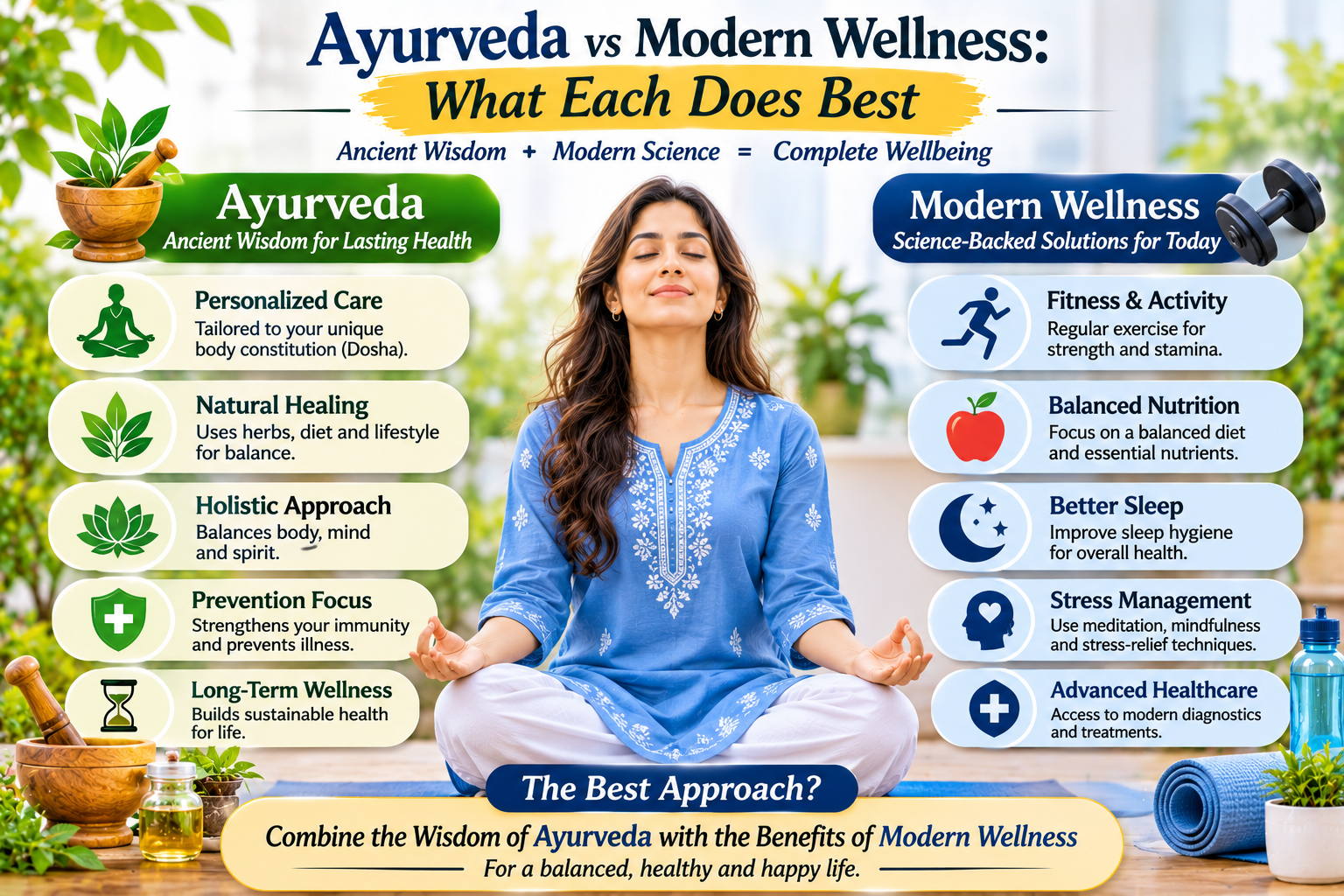
Open any wellness feed and you will see two very different voices. One recommends warm spiced milk, oil massage, and eating according to your “dosha.” The other talks about blood markers, sleep tracking, protein targets, and clinical trials. Which one is right?
The honest answer is that they are good at different things. Ayurveda, India’s traditional system of health, offers a rich framework for daily rhythm, prevention, and whole-person care. Modern wellness, built on biomedical science, offers diagnostics, tested treatments, and emergency care. This article compares the two fairly, explains what each does best, and shows how to combine them sensibly, without pretending that either is a magic solution.
What Is Ayurveda?
Ayurveda, often translated as “the science of life,” is a traditional system of medicine that developed in the Indian subcontinent over thousands of years. Its core ideas include:
- The three doshas (vata, pitta, kapha): Descriptions of broad physical and psychological tendencies, used to personalise advice.
- Prakriti (constitution): A person’s baseline nature, compared against their current state (vikriti).
- Agni (digestive fire): The strength of digestion and metabolism, considered central to health.
- Daily and seasonal routines: Practices known as dinacharya and ritucharya that align habits with the time of day and the season.
- Diet, herbs, massage, and cleansing therapies: Tools used to support balance.
Ayurveda is closely connected to yoga. Both traditions emphasise breath, movement, food, sleep, and mental habits as parts of one system.
What Is “Modern Wellness”?
“Modern wellness” is a broad term. In this article, it refers to health approaches built on contemporary science, including:
- Biomedical medicine: Diagnosis, laboratory testing, imaging, surgery, vaccines, and prescription medicines.
- Nutritional science: Evidence-based dietary guidance and clinical nutrition.
- Exercise science and physiotherapy: Structured training, rehabilitation, and injury prevention.
- Mental health care: Psychotherapy, psychiatry, and evidence-based stress management.
- Sleep science and lifestyle medicine: Research-led guidance on sleep, activity, and habits.
- Digital tools: Wearables and apps that track steps, heart rate, and sleep patterns.
Its defining feature is a reliance on testing claims through controlled studies and updating practice when evidence changes.
Philosophy: Two Different Starting Points
| Ayurveda | Modern wellness | |
|---|---|---|
| Core view | Health is balance of body, mind, and environment | Health is function, measured by biology and outcomes |
| Approach | Personalised by constitution and lifestyle | Standardised by evidence, then tailored to the individual |
| Strength | Prevention, routine, whole-person view | Diagnosis, testing, acute and emergency care |
| Evidence base | Long tradition; variable modern research | Large trials, regulation, and ongoing monitoring |
| Typical tools | Diet, herbs, massage, yoga, routine | Medication, surgery, therapy, structured exercise |
Neither is complete on its own, which is why many practitioners now talk about integrative approaches.
What Ayurveda Does Best
1. Daily rhythm and preventive habits
Ayurveda places great importance on routine: waking at a consistent time, eating meals at regular hours, balancing activity with rest, and adjusting habits to the seasons. These principles overlap with what sleep and lifestyle researchers now emphasise, namely regularity, moderation, and attention to circadian rhythms.
2. A whole-person perspective
Where a clinical visit may focus on one symptom, Ayurveda asks about digestion, sleep, stress, season, and daily habits all together. Many people find that this broader conversation helps them notice patterns they had overlooked.
3. Mindful eating and food culture
Ayurvedic guidance often encourages freshly prepared, seasonal, simple meals, eating in a calm setting, and paying attention to hunger and digestion. This resonates with modern research on mindful eating and minimally processed food, though specific claims about foods “balancing” doshas have not been established by clinical trials.
4. Supportive therapies and relaxation
Practices such as oil massage and restorative treatments are enjoyed by many for relaxation and stress relief. If you are drawn to the therapeutic side of the tradition, choose a qualified practitioner and tell them about any medical conditions or medicines first.
5. Integration with yoga and meditation
Ayurveda and yoga complement each other naturally. Gentle movement, breath practices, and meditation are commonly recommended to support the same goals of balance and resilience.
What Modern Wellness Does Best
1. Accurate diagnosis
Blood tests, scans, and clinical examination can detect conditions such as diabetes, thyroid disorders, anaemia, infections, and heart disease. A traditional assessment cannot replace these tools. If you have symptoms that are persistent, severe, or unexplained, a clinical evaluation comes first.
2. Emergency and acute care
Heart attacks, strokes, serious infections, fractures, and many other conditions require rapid, proven treatment. In these situations, modern medicine is the appropriate path.
3. Tested and regulated treatments
Medications go through clinical trials and are monitored for safety, dosing, and interactions. Vaccination, antibiotics, insulin, and many cancer therapies are examples where modern science has measurably saved lives.
4. Measurement and tracking
Blood pressure, blood glucose, cholesterol, bone density, and sleep patterns can all be measured. That allows progress to be monitored objectively, which is especially valuable in chronic conditions.
5. Evidence-based mental health care
Psychotherapy and, where appropriate, medication have strong research support for conditions such as depression and anxiety disorders. Yoga and Ayurveda may support wellbeing, but they should not replace professional care when a condition is significant.
Where Each Approach Has Limits
Ayurveda’s limits:
- Many traditional concepts, such as doshas, have not been validated by modern clinical research.
- Quality of research on herbal formulations varies, and some studies are small or poorly controlled.
- Herbal and mineral preparations can interact with medicines or, if poorly manufactured, may contain contaminants. Studies of some commercially available products have reported heavy metals, so quality and sourcing matter.
- It should not be used in place of diagnosis or treatment for serious or time-sensitive conditions.
Modern wellness’s limits:
- Appointments can be short and focused on a single problem, leaving lifestyle factors less explored.
- Wellness trends can outpace the evidence, from over-marketed supplements to unproven detoxes.
- Treatment sometimes focuses on managing symptoms rather than supporting daily habits.
- Access, cost, and time pressure can limit preventive care.
Examples: Using Both Thoughtfully
Blood sugar and nutrition. A doctor can diagnose diabetes and prescribe appropriate treatment, while a dietitian provides evidence-based guidance. Traditional ideas such as regular meal timing and fresh, simple food may complement that plan. For general information on food choices, you can read about a healthy diet for diabetics, but personal dietary changes should be agreed with your care team.
Hormonal health. Conditions such as PCOS are diagnosed and managed through clinical care. Gentle movement, stress management, and sleep routines can be supportive additions. If you are exploring lifestyle support, resources on yoga for PCOS and yoga for hormonal balance discuss gentle practices, always alongside medical advice.
Thyroid health. Thyroid conditions require testing and often long-term medical management. Some people also use gentle yoga for general wellbeing; to learn more, see yoga for hypothyroidism, and remember that any practice should be adapted to your doctor’s guidance.
Stress and sleep. Both traditions agree on foundations such as regular sleep, movement, balanced meals, and breath awareness. Evidence-based therapies can be added if stress or insomnia becomes persistent.
How to Combine Ayurveda and Modern Wellness Safely
- Start with a proper diagnosis if you have symptoms. Do not self-diagnose from a dosha quiz.
- Tell every practitioner everything. Share all medications, herbs, and supplements with your doctor and your Ayurvedic practitioner.
- Be cautious with herbs. Ask about interactions, especially if you take blood thinners, diabetes medication, thyroid medication, or are pregnant.
- Choose qualified practitioners. Look for recognised training, transparency, and willingness to coordinate with your doctor.
- Be wary of absolute claims. Phrases like “cures everything” or “no side effects” are red flags in any tradition.
- Use traditional wisdom where it is low-risk. Regular routines, simple meals, relaxation practices, and gentle yoga are usually safe and sensible for many people.
- Reassess regularly. If symptoms worsen or do not improve, return to your doctor.
A Practical Daily Blend
Here is a balanced example that draws from both worlds:
- Morning: Consistent wake time, light movement or yoga, a simple breakfast.
- Midday: Your main meal, eaten without screens, followed by a short walk.
- Afternoon: Hydration, brief movement breaks, and check-ins with your breath.
- Evening: Lighter dinner, screen reduction, gentle stretching or meditation.
- Regularly: Annual check-ups, screenings recommended for your age and risk, and open conversations with your healthcare provider.
Frequently Asked Questions
Is Ayurveda scientifically proven? Some components, such as certain herbs and lifestyle practices, have been studied with mixed results, while many core concepts have not been validated by rigorous trials. Research is ongoing.
Can Ayurveda replace modern medicine? No. It can complement some aspects of care, but it should not replace diagnosis or treatment for serious or acute conditions.
Is modern wellness better than traditional systems? It is better at diagnosis and emergency care, and its claims are tested more rigorously. Traditional systems can still offer useful preventive habits and personalised attention.
Are Ayurvedic herbs safe? Many people use them without problems, but quality varies, and herbs can interact with medicines. Always consult a qualified professional and your doctor.
What is the easiest way to start combining them? Begin with low-risk habits: regular sleep, simple meals, daily movement, and relaxation, while keeping your doctor informed.
Final Thoughts
Framing this as a contest misses the point. Modern science excels at finding out what is wrong and fixing it with tested tools. Ayurveda and yoga excel at shaping the daily habits that support long-term wellbeing. The most reliable approach is curious but careful: respect tradition, ask for evidence, involve qualified professionals, and listen to your own body. Used that way, each system can cover the other’s blind spots.