 Skip to content
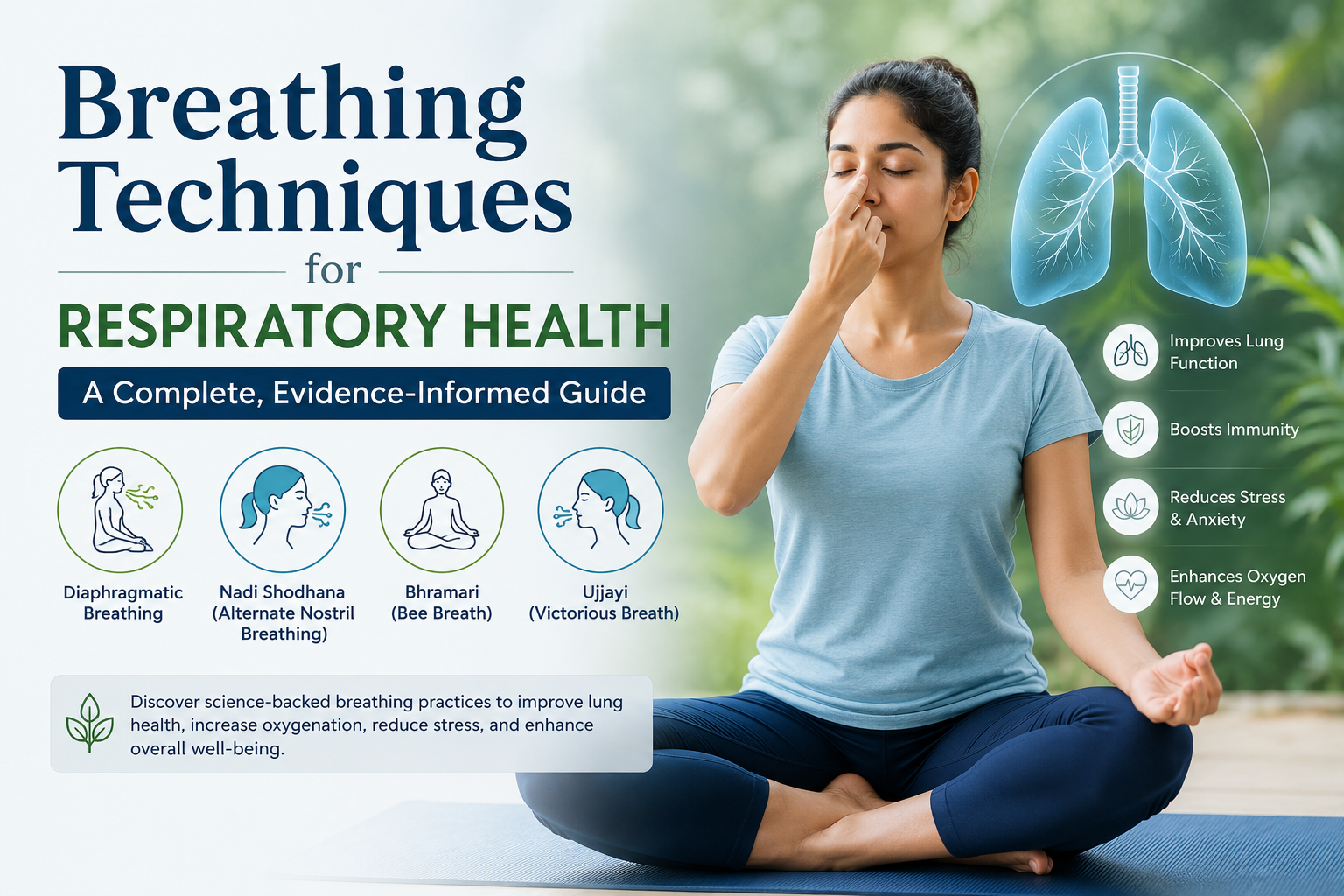
An informational guide to how the breath actually works, which breathing techniques have genuine, evidence-aligned benefits for respiratory health, and where popular claims about breathwork outpace the science.
Breathing is something most people never think about until it feels difficult, and that is exactly when breathing techniques tend to attract attention. Wellness content often markets a particular pranayama practice or breathing pattern as a way to “heal the lungs” or reverse chronic respiratory disease, and those claims deserve a closer look. The more accurate picture is more modest: respiratory health depends on the condition of the airways, lungs, and nervous system, and no breathing technique repairs damaged lung tissue or cures a diagnosed respiratory condition on its own.
What breathing techniques can genuinely offer is support for how efficiently the breath is used, a calmer nervous system, and better day-to-day breathing mechanics, a real and useful role that falls well short of a cure. This guide walks through how respiration actually works, where breathing techniques have an evidence-aligned role in supporting respiratory health, and where popular claims go further than research supports. Breathwork is not a substitute for medical care, and anyone with a diagnosed lung condition or persistent breathing difficulty should treat it as a complement to, not a replacement for, appropriate diagnosis and treatment.
1. How Breathing Actually Works
Respiration is the process by which the lungs bring in oxygen and remove carbon dioxide, driven mainly by the diaphragm, a dome-shaped muscle beneath the lungs. When the diaphragm contracts and flattens, it draws air into the lungs; when it relaxes, air is pushed back out. Many adults, especially under stress, shift toward shallow chest breathing that relies more on the neck and shoulder muscles and less on the diaphragm, which can make breathing feel less efficient and can reinforce a sense of tension. Understanding this mechanism clarifies what breathing techniques can realistically do: retrain more efficient breathing patterns and support the nervous system, not repair underlying lung pathology.
2. Why Claims That Breathwork “Cures” Respiratory Disease Go Too Far
It is easy to find content suggesting that a specific breathing pattern can reverse asthma, COPD, or other diagnosed respiratory conditions. These claims are not well supported. Conditions such as asthma, COPD, and chronic bronchitis involve airway inflammation, structural changes, or airflow obstruction that a breathing exercise does not directly reverse. The more accurate picture is that certain techniques can be a helpful complementary practice for easing the sensation of breathlessness, improving breathing efficiency, and reducing anxiety around breathing difficulty, offering modest, real benefits without replacing appropriate medical evaluation and treatment.
3. What the Research Actually Shows
Research on breathing techniques is more developed than research on many other wellness practices, and it points toward a fairly consistent conclusion: diaphragmatic breathing and slow-paced breathing show reasonably good evidence for reducing the perceived effort of breathing and supporting relaxation, while techniques such as pursed-lip breathing have documented benefit for people managing breathlessness in conditions like COPD, generally as part of a broader pulmonary rehabilitation approach rather than a standalone cure. Evidence specifically for more elaborate pranayama sequences reversing chronic lung disease is much thinner and largely anecdotal. The fair summary: certain foundational techniques, diaphragmatic and slow breathing in particular, have genuine supportive evidence, while broader claims about breathwork curing respiratory disease outpace what has actually been studied.
4. Core Breathing Techniques Worth Learning
A handful of techniques account for most of the evidence-aligned benefit associated with breathwork. Diaphragmatic breathing, sometimes called belly breathing, involves consciously engaging the diaphragm rather than the chest and shoulders, and is often the starting point for retraining more efficient breathing mechanics. Pursed-lip breathing, which involves inhaling through the nose and exhaling slowly through slightly pursed lips, can help some people manage the sensation of breathlessness by keeping airways open a little longer during exhalation. Box breathing and other equal-count breathing patterns, which pace inhale, hold, and exhale phases evenly, are widely used for calming the nervous system rather than for any direct effect on lung tissue. Alternate nostril breathing, a traditional pranayama practice, is generally used for its calming, attention-focusing effect rather than a documented respiratory-disease benefit.
A gradual, structured approach to this kind of practice, of the sort covered in Pranayama for Stress Relief, offers a sensible starting point, since it builds calm, controlled breathing rather than anything forceful that could feel uncomfortable for someone new to the practice.
5. Postures and Positioning Often Discussed Alongside Breathwork
Body position affects how easily the diaphragm can move, which is part of why certain postures are often paired with breathing practice. Sitting upright with a long spine, rather than slumped forward, tends to give the diaphragm more room to work. Some people find that a gentle forward lean with the arms supported, sometimes called the tripod position, subjectively eases the effort of breathing during an episode of breathlessness. Restorative, supported postures are often recommended over strenuous ones when breathing feels effortful, since vigorous movement increases oxygen demand at the same time the breath already feels limited. Evidence for any single posture directly improving lung function is limited, and the right choice varies by individual, so noticing how a position actually feels and adjusting accordingly is safer than assuming any posture is universally beneficial.
6. Diaphragmatic Breathing: The Most Evidence-Supported Practice
Of all the techniques discussed here, diaphragmatic breathing has the broadest and most consistent research support, since retraining the diaphragm to do more of the work of breathing is associated with reduced breathlessness, lower perceived effort, and improved exercise tolerance in some populations, alongside general relaxation benefits. This practice requires patience rather than force: most people default to shallow chest breathing without noticing, and retraining the pattern typically takes consistent, gentle practice over weeks rather than a single session. Anyone with a diagnosed respiratory condition should learn diaphragmatic breathing technique from a qualified instructor or clinician familiar with their specific situation.
7. Breathwork for Specific Situations
Slow, paced breathing is widely used to support comfort during moments of acute breathlessness, anxiety, or panic, since it can help interrupt the rapid, shallow breathing pattern that often accompanies those states without treating an underlying medical cause. It does not resolve an asthma flare, an infection, or a structural lung problem, so it works best as a comfort and coping measure alongside, rather than instead of, appropriate medical care.
The overlap between breathing pattern and anxious states is explored further in Yoga for Panic Attacks, which looks at how breath-focused practice can support people managing acute anxiety symptoms.
8. Stress, the Nervous System, and Respiratory Comfort
Chronic stress does not cause respiratory disease, but there is a well-documented relationship between stress, the autonomic nervous system, and how breathing feels day to day. Slow, controlled breathing techniques activate the parasympathetic nervous system, which is associated with a calmer physiological state and, for many people, a subjective sense of easier breathing. This is one of the more genuinely evidence-aligned connections between breathwork and respiratory health: not that breathing exercises treat lung pathology directly, but that their well-established calming effect may play a supportive role in how breathlessness and breathing-related anxiety are experienced over time.
This relationship between the nervous system, rest, and physical wellbeing is discussed further in Yoga Nidra in Rishikesh, which explores how deep restorative practice supports the kind of rest the body’s regulatory systems depend on.
9. Practices and Situations to Approach With Caution
Not every breathing technique suits every situation. Forceful or rapid breathing techniques, sometimes taught as detoxifying or energising practices, can cause lightheadedness, tingling, or anxiety in some people and are generally best avoided during an active respiratory illness, pregnancy, or for anyone with a cardiovascular condition, without individual guidance. Breath-holding practices should be approached cautiously by anyone with a diagnosed lung or heart condition. If breathlessness is sudden, severe, accompanied by chest pain, or occurs at rest, that is a signal to seek urgent medical evaluation rather than attempting a breathing technique to manage it.
10. Building a Safe, Realistic Practice
A breathing practice that genuinely supports respiratory health looks gentle and consistent, built around a small number of well-understood techniques rather than an elaborate routine.
- Start with diaphragmatic breathing in a comfortable seated or lying position for a few minutes at a time.
- Use slow, paced breathing during moments of stress or breathlessness rather than forceful or rapid techniques.
- Consider pursed-lip breathing if breathlessness is a recurring concern, ideally after guidance from a clinician or a teacher trained through a structured Yoga Teacher Training in Rishikesh programme.
- Sit upright with a long spine when practising, since posture affects how freely the diaphragm can move.
- Treat consistency and gradual progress as more valuable than pushing through forceful techniques while unwell.
11. Traditional Pranayama Perspectives on the Breath
Traditional yogic approaches to breath, known collectively as pranayama, have long treated the breath as a bridge between the body and the nervous system, with techniques ranging from very gentle, restorative patterns to more advanced, activating ones. While these traditions use different language than modern respiratory medicine, the underlying emphasis on slow, controlled, diaphragm-led breathing aligns reasonably well with the evidence-based, comfort-focused approach described throughout this guide.
Practices such as Kundalini Yoga in Rishikesh and Ashtanga Yoga in Rishikesh each approach breath differently, one leaning toward slow, meditative pranayama and the other toward breath synchronised with continuous movement, illustrating that “breathwork” is not a single technique but a spectrum suited to different goals and physical conditions.
12. Red Flags in Breathwork-for-Respiratory-Health Claims
A few common red flags tend to signal claims about breathing techniques that outpace the evidence.
- Suggestions that a breathing pattern can cure asthma, COPD, or other diagnosed lung conditions without medical treatment.
- Encouragement to skip inhalers, medication, or other prescribed treatment in favour of a breathwork programme.
- Forceful breathing techniques taught without any mention of who should avoid them.
- Vague claims that a technique “detoxifies the lungs” without any explanation of the underlying mechanism.
13. Learning These Practices Properly
Because separating genuine, evidence-aligned breathing practice from overstated wellness marketing requires understanding both technique and basic respiratory physiology, learning from a properly trained teacher makes a real difference.
A structured programme at a Best Yoga School in Rishikesh typically covers the physiological basis of breath work alongside traditional pranayama, offering a grounded understanding of what these techniques can genuinely offer people managing their respiratory health.
Safety Notes and When to See a Doctor
Breathing techniques can genuinely support respiratory comfort, but they should never replace appropriate medical diagnosis or treatment.
- Sudden, severe breathlessness, chest pain, or breathlessness at rest requires urgent medical attention.
- A diagnosed lung or heart condition warrants guidance from a clinician before beginning forceful or advanced breathing techniques.
- Persistent cough, wheeze, or breathlessness lasting more than a few weeks should be evaluated by a doctor.
- Anyone new to breathwork should learn technique from a qualified instructor, particularly if pregnant or managing a chronic condition.
Frequently Asked Questions (FAQs)
Q1. Can breathing techniques cure asthma or COPD?
No. These conditions involve airway inflammation or structural changes that a breathing exercise does not reverse directly. Breathing techniques can support comfort, breathing efficiency, and anxiety around breathlessness, but they do not replace medical diagnosis or treatment.
Q2. What is the single most useful breathing technique to learn?
Diaphragmatic breathing has the broadest evidence base and is generally the best starting point, since it retrains more efficient breathing mechanics that other techniques tend to build on.
Q3. Are forceful breathing techniques good for the lungs?
Not necessarily. Rapid or forceful techniques can cause lightheadedness or anxiety in some people and are generally best avoided during illness or by anyone with a cardiovascular condition without individual guidance.
Q4. Should I practise breathing techniques during a respiratory illness?
Gentle, slow breathing is generally fine, but vigorous or forceful techniques are often more comfortable to skip until symptoms ease, and sudden or severe breathlessness should prompt medical evaluation rather than a breathing exercise.
Q5. Can stress make breathing problems worse, and can breathwork help?
Stress does not directly cause respiratory disease, but it does affect the nervous system and how breathing feels, and slow, paced breathing’s well-documented calming effect may offer supportive benefit for people who notice their breathing tightens under stress.
Q6. Can breathing techniques replace an inhaler or prescribed medication?
No. Diagnosed respiratory conditions require appropriate medical treatment, and breathwork should never be used as a substitute for inhalers, medication, or other prescribed care when a doctor determines they are needed.
Q7. What is the most evidence-based way to think about breathwork’s role in respiratory health?
The most accurate framing is that breathing techniques, particularly diaphragmatic and slow-paced breathing, can support breathing efficiency, comfort, and nervous-system regulation, working alongside, not instead of, appropriate medical care.
Final Thoughts
Respiratory health depends on the condition of the airways, lungs, and nervous system, and the most honest, evidence-aligned view of breathing techniques is a supportive one: helping with breathing efficiency, comfort during breathlessness, and the stress that often makes symptoms feel worse, rather than reversing underlying lung pathology. This is a more modest picture than some wellness marketing suggests, but it is also a safer and more realistic one.
Approached gradually, alongside appropriate medical guidance when symptoms are persistent or severe, breathing techniques can offer many people a genuinely useful, low-risk way to support respiratory comfort day to day and over the long term.
