 Skip to content
An informational guide to what Kapalabhati (skull-shining breath) can and cannot do — covering how the technique actually works in the body, where its genuine, evidence-aligned benefits lie, who should approach it with caution, and where popular claims about Kapalabhati as a cure-all outpace the science.
Few pranayama techniques attract as much enthusiastic marketing as Kapalabhati, often described as a near-miraculous practice for detoxifying the body, curing digestive problems, melting fat, and clearing the mind, sometimes all in the same breath. The more accurate picture is more modest: Kapalabhati is a forceful, rhythmic breathing technique that engages the diaphragm and abdominal muscles in a specific way, and while it has some genuinely interesting physiological effects, it does not detoxify organs, cure disease, or replace medical treatment for any diagnosed condition.
What Kapalabhati can genuinely offer is a distinctive way to energise the body, engage the core and diaphragm, sharpen mental alertness, and support the kind of breath control that underlies more advanced pranayama practice, a real and useful role that falls well short of the sweeping claims often made about it. This guide walks through how Kapalabhati actually works, where it has an evidence-aligned role, and where popular claims go further than research supports. Kapalabhati is not suitable for everyone, and it is not a substitute for medical care for anyone managing a diagnosed health condition.
1. What Kapalabhati Actually Is and How It Works in the Body
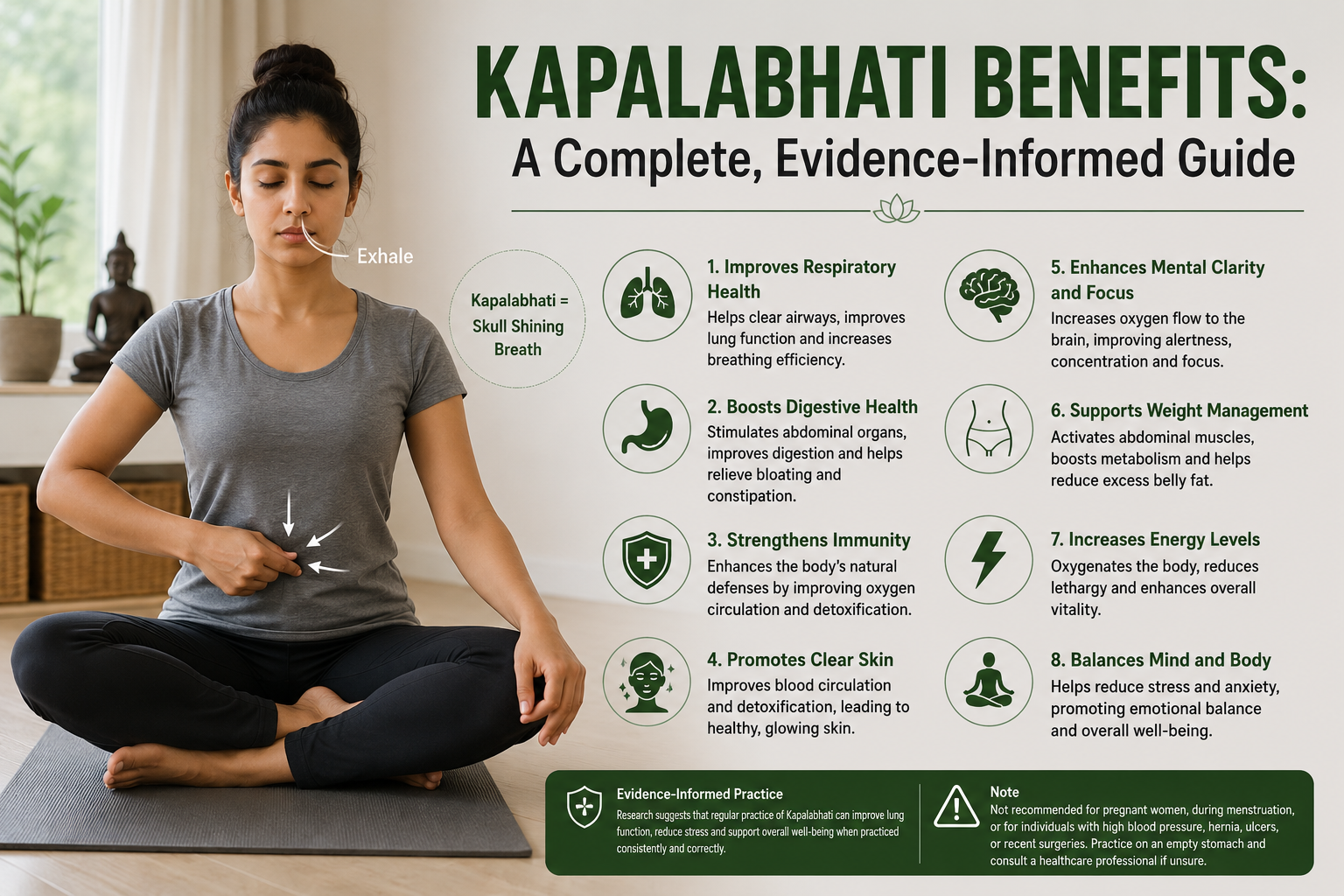
Kapalabhati, sometimes translated as “skull-shining breath,” is technically classified in yogic tradition as a cleansing practice, or kriya, as much as a pranayama technique. It involves short, forceful exhalations produced by sharply contracting the abdominal muscles, with a passive, automatic inhalation between each exhale, typically performed in rapid rhythmic rounds. This pattern is distinct from most other pranayama techniques, which tend to emphasise slow, controlled, even breathing; Kapalabhati is deliberately rapid and activating rather than calming. The forceful abdominal contraction engages the core muscles repeatedly and increases respiratory rate and ventilation for the duration of the practice, which is part of why it produces a noticeably different physical sensation than slow diaphragmatic breathing. Understanding this mechanism clarifies what Kapalabhati can realistically do: stimulate the body and engage the core and breathing muscles, not flush toxins from organs or reverse disease.
2. Why Claims That Kapalabhati “Detoxifies” or “Cures” Disease Go Too Far
It is easy to find wellness content suggesting Kapalabhati detoxifies the liver, cures digestive disorders, cleanses the blood, or resolves chronic disease. These claims are not well supported. The body’s detoxification is handled by the liver and kidneys through continuous biochemical processes, not by a breathing pattern, and no controlled research demonstrates that Kapalabhati removes toxins from specific organs. The more accurate picture is that Kapalabhati can be a genuinely stimulating, core-engaging practice with some documented effects on alertness and respiratory muscle engagement, offering real but modest benefits that fall well short of the detoxification and disease-curing claims often attached to it.
This gap between marketing claims and evidence is explored more broadly in Yoga and Detoxification, which looks at what yoga practices can and cannot genuinely do for the body’s detoxification processes.
3. What the Research Actually Shows
Research specifically on Kapalabhati is more limited than on gentler pranayama techniques, though some small studies suggest short-term effects on alertness, reaction time, and certain measures of respiratory muscle strength with regular practice. Other studies have looked at effects on markers of oxidative stress and cognitive function with mixed and preliminary results that do not yet support strong claims. Evidence for Kapalabhati treating specific diseases, reversing organ dysfunction, or producing meaningful weight loss is thin and largely anecdotal. The fair summary: Kapalabhati has some genuine, if modest and preliminary, evidence for short-term alertness and respiratory muscle engagement, while broader claims about detoxification, disease cures, and dramatic health transformations outpace what has actually been studied.
4. How Kapalabhati Is Traditionally Practised
Kapalabhati is traditionally practised seated with a tall, comfortable spine, beginning with a few rounds of normal breathing before starting short, sharp exhalations through the nose, produced by quickly pulling the navel toward the spine, with the inhalation happening passively and automatically in between. Beginners are generally advised to start with a slow pace and a small number of rounds, gradually building speed and repetitions only as the technique feels controlled and comfortable, rather than starting with rapid, prolonged rounds. The practice is usually followed by a period of normal, quiet breathing to allow the body to settle.
A gradual, structured approach to pranayama generally, of the sort covered in Pranayama for Stress Relief, offers useful context for understanding where a forceful technique like Kapalabhati fits alongside gentler, calming breath practices.
5. Genuine, Evidence-Aligned Benefits Worth Noting
Set against the more modest evidence base, a few benefits of Kapalabhati are reasonably well supported. The repeated forceful abdominal contractions genuinely engage the core muscles, and consistent practice can contribute to abdominal muscle tone as part of a broader movement and breath practice. The rapid, rhythmic nature of the technique has a documented short-term stimulating, alertness-boosting effect for many practitioners, which is part of why it is traditionally practised in the morning rather than before bed. Some people also find the focused, rhythmic nature of the practice supports concentration and a sense of mental clarity immediately afterward, though this effect is subjective and not something research has quantified precisely.
6. Kapalabhati Compared With Calmer Pranayama Practices
Kapalabhati sits at the activating end of the pranayama spectrum, which is worth understanding before choosing when and how to practise it. Slow, diaphragmatic breathing and restorative pranayama techniques activate the parasympathetic nervous system and are generally used for calming and winding down, while Kapalabhati’s rapid, forceful pattern is stimulating and is not typically recommended before sleep or during a period when calming down is the goal.
This contrast is worth keeping in mind alongside restorative practices explored in Yoga Nidra in Rishikesh, which looks at the opposite end of the spectrum: deep, calming rest rather than energising stimulation.
7. Practices and Situations to Approach With Caution
Kapalabhati is not suitable for everyone, and this is one of the more important points that enthusiastic marketing sometimes glosses over. It is generally advised against during pregnancy, for anyone with high blood pressure, cardiovascular disease, hernia, recent abdominal surgery, or epilepsy, and for anyone with a diagnosed respiratory condition such as asthma or COPD, since the forceful, rapid breathing pattern can be overstimulating or physically risky in these situations. People new to the practice should start slowly and stop if they experience dizziness, lightheadedness, or discomfort. Anyone with an existing health condition should check with a doctor or a qualified, experienced teacher before beginning Kapalabhati rather than following a generic online tutorial.
8. Building a Safe, Realistic Practice
A Kapalabhati practice that genuinely supports wellbeing looks gradual and well-supervised rather than intense from the first session.
- Start with a slow pace and a small number of rounds, building intensity gradually over weeks rather than days.
- Practise on an empty stomach, generally in the morning, when the activating effect is less likely to interfere with sleep.
- Stop immediately if dizziness, lightheadedness, or discomfort occurs, and return to normal breathing.
- Learn the technique first from a qualified, experienced teacher, ideally through a structured Yoga Teacher Training in Rishikesh programme rather than an unsupervised video.
- Avoid the practice entirely if pregnant, or if managing high blood pressure, heart disease, hernia, epilepsy, or a respiratory condition, without individual medical clearance.
9. Traditional Yogic Perspectives on Kapalabhati
In traditional hatha yoga texts, Kapalabhati is classified among the shatkarmas, a set of cleansing practices intended to prepare the body and mind for deeper meditative and pranayama work, rather than as a general wellness exercise in the modern fitness sense. This traditional framing treated it as one tool among several, used with guidance and in a particular sequence, rather than a standalone daily practice for every purpose. Modern wellness marketing sometimes strips away this context, presenting Kapalabhati as a universal cure-all rather than the specific, purpose-built practice it was traditionally understood to be.
Traditions such as Kundalini Yoga in Rishikesh often teach Kapalabhati within this fuller traditional context, alongside guidance on sequencing, contraindications, and how it relates to other pranayama and meditative practices.
10. Red Flags in Kapalabhati Marketing Claims
A few common red flags tend to signal claims about Kapalabhati that outpace the evidence.
- Suggestions that Kapalabhati detoxifies specific organs, purifies the blood, or cures chronic disease.
- Claims of rapid, dramatic weight loss from Kapalabhati alone without any mention of diet or overall activity.
- Tutorials that teach rapid, prolonged rounds from the first session without any mention of contraindications.
- Encouragement to practise Kapalabhati during pregnancy or with a diagnosed heart, lung, or abdominal condition without medical guidance.
11. Learning This Practice Properly
Because Kapalabhati is a forceful technique with real contraindications, learning it from a properly trained teacher who can assess individual readiness and correct technique makes a meaningful difference to both safety and benefit.
A structured programme at a Best Yoga School in Rishikesh typically teaches Kapalabhati within a broader pranayama curriculum, alongside the physiological grounding and contraindication awareness needed to practise it safely and appropriately.
Safety Notes and When to See a Doctor
Kapalabhati can offer a genuinely stimulating, core-engaging practice for many healthy adults, but it carries real contraindications and should never replace appropriate medical diagnosis or treatment.
- Anyone pregnant, or managing high blood pressure, heart disease, hernia, epilepsy, or a diagnosed respiratory condition, should avoid Kapalabhati without individual medical clearance.
- Persistent dizziness, chest discomfort, or breathlessness during or after practice warrants medical evaluation.
- Recent abdominal or eye surgery generally warrants avoiding forceful abdominal breathing techniques until cleared by a doctor.
- Anyone new to Kapalabhati should learn correct technique and pacing from a qualified, experienced instructor rather than an unsupervised tutorial.
Frequently Asked Questions (FAQs)
Q1. Does Kapalabhati actually detoxify the body?
No, not in the way it is often marketed. The body’s detoxification is handled continuously by the liver and kidneys, and no controlled research shows Kapalabhati removes toxins from specific organs. Its genuine benefits lie elsewhere, in core engagement and short-term alertness.
Q2. Can Kapalabhati cure digestive problems or chronic disease?
No. Kapalabhati does not reverse diagnosed digestive or chronic conditions, and claims to the contrary are not well supported by research. It can be a complementary practice for some people, but it does not replace medical evaluation and treatment.
Q3. Is Kapalabhati safe for everyone?
No. It is generally advised against during pregnancy and for people with high blood pressure, heart disease, hernia, epilepsy, or a diagnosed respiratory condition, and anyone with a health condition should seek medical clearance before starting.
Q4. Does Kapalabhati help with weight loss?
Evidence for meaningful weight loss from Kapalabhati alone is thin. Any effect is far more likely to come from an overall active lifestyle and diet than from the breathing practice itself, and claims of dramatic weight loss from the technique alone outpace the evidence.
Q5. Should Kapalabhati be practised before bed?
Generally not. Kapalabhati is a rapid, stimulating technique traditionally practised in the morning, and its activating effect makes it a poor fit for winding down before sleep.
Q6. How should a beginner start practising Kapalabhati?
Slowly, with a small number of rounds and a gentle pace, ideally under the guidance of a qualified teacher who can check technique and screen for contraindications, rather than following a rapid, prolonged routine from an online video.
Q7. What is the most evidence-based way to think about Kapalabhati’s benefits?
The most accurate framing is that Kapalabhati offers core engagement, short-term alertness, and a distinctive addition to a broader pranayama practice for suitable, healthy practitioners, rather than a detoxifying or disease-curing technique, and it works best learned properly and practised with awareness of its contraindications.
Final Thoughts
Kapalabhati is a genuinely distinctive breathing practice with real, if modest, evidence-aligned benefits around core engagement and short-term alertness, and the most honest view of its role sits well short of the detoxification and disease-curing claims often attached to it. This is a more measured picture than some wellness marketing suggests, but it is also a safer and more realistic one, particularly given the technique’s real contraindications.
Approached gradually, with proper instruction and appropriate awareness of who should avoid it, Kapalabhati can offer many healthy practitioners a genuinely useful, energising addition to a broader pranayama and yoga practice.
