 Skip to content
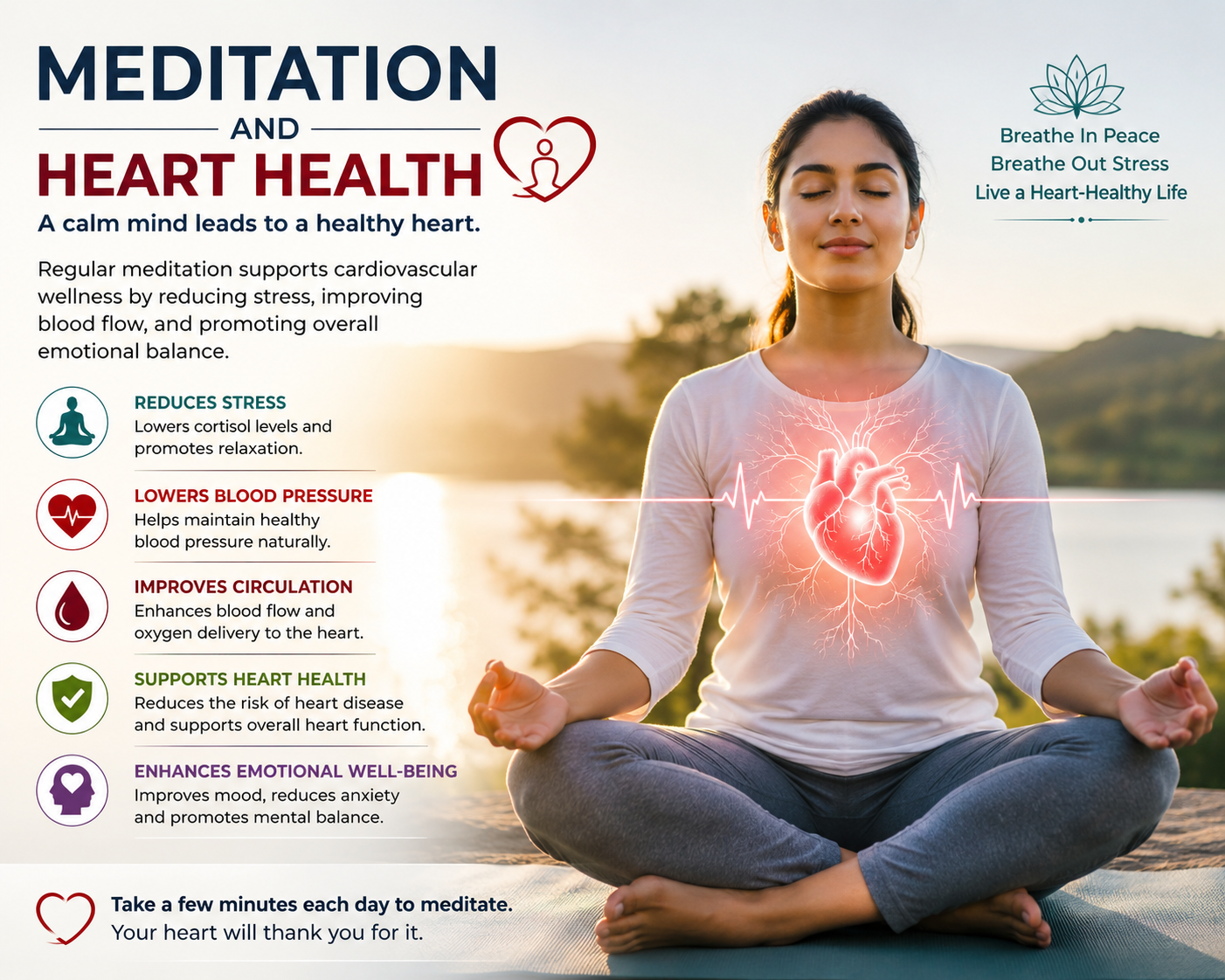
Meditation is often discussed as a tool for mental clarity and stress relief, but a growing body of cardiovascular research suggests its benefits extend well beyond the mind. Regular meditation practice has been linked to measurable improvements in blood pressure, heart rate variability, and markers of inflammation, all of which play a direct role in long-term cardiovascular risk.
This article looks at how meditation supports heart health, what the research actually shows, which techniques tend to offer the most benefit, and how to build a sustainable practice around them. For readers who want to explore meditation as part of a broader, structured practice rather than in isolation, a Yoga Teacher Training in Rishikesh typically integrates meditation, breathwork, and physical practice together, since traditional yogic teaching has never treated the three as separate.
The Heart-Mind Connection: Why It Isn’t Just a Metaphor
The idea that emotional states affect the heart isn’t purely poetic. Chronic stress keeps the sympathetic nervous system, the body’s fight-or-flight response, in a state of low-grade activation, which over time contributes to elevated heart rate, higher blood pressure, and increased systemic inflammation, three of the most well-established drivers of cardiovascular disease.
Meditation works on this system directly. By training attention and reducing the constant background activation of stress-related pathways, it allows the parasympathetic, or rest-and-digest, branch of the nervous system to take over more of the time, which is precisely the shift that supports a healthier cardiovascular baseline.
What the Research Says About Meditation and Cardiovascular Risk
Several clinical studies, including trials published through cardiology and behavioral medicine journals, have found associations between regular meditation practice and reductions in systolic and diastolic blood pressure, improved heart rate variability, and lower levels of circulating stress hormones such as cortisol. Some research has also linked consistent meditation practice to slower progression of atherosclerosis in high-risk populations, alongside modest improvements in markers of systemic inflammation such as C-reactive protein, though this area continues to be studied and results vary across trial designs and populations.
As with other complementary approaches, meditation is best understood as an addition to standard cardiac care rather than a substitute for medication, monitoring, or medically supervised treatment. Its most consistent, well-supported role is in reducing the chronic stress burden that compounds other, more established cardiovascular risk factors, and several major hospital systems now offer structured meditation or mindfulness-based programs alongside conventional cardiac rehabilitation for exactly this reason.
The Best Meditation Practices for Heart Health
Not all meditation styles are studied equally for cardiovascular benefit, and some are simply easier to sustain as a daily habit than others. A few approaches stand out for their relevance to heart health specifically.
Breath-Focused and Pranayama-Based Meditation
Meditation practices built around slow, controlled breathing tend to have the most directly measurable cardiovascular effect, since breath rate and heart rate are closely linked through the vagus nerve. Pranayama for Stress Relief covers several techniques, such as slow diaphragmatic breathing and extended-exhale patterns, that are frequently used as a bridge between formal pranayama and seated meditation practice for exactly this reason.
Yoga Nidra as a Gateway to Deep Rest
For people who find seated meditation difficult to sustain, guided relaxation practices offer a more accessible entry point into the same physiological state. Structured sessions modeled on Yoga Nidra in Rishikesh are often recommended specifically because the guided format makes it easier to reach a genuinely restful state without needing years of meditation training first, while still producing many of the same cardiovascular benefits as more traditional silent practice.
Meditative Movement and Mantra-Based Practice
Some traditions combine meditation with movement or sound rather than stillness alone. Practices associated with Kundalini Yoga in Rishikesh India, which pair rhythmic breath, mantra, and gentle movement, offer an alternative entry point for people who find pure seated stillness difficult to maintain, while still engaging the same nervous-system pathways that support cardiovascular recovery.
Mindfulness and Present-Moment Awareness
Simple present-moment awareness practices, where attention is repeatedly brought back to the breath or bodily sensation without judgment, form the basis of many of the most widely studied clinical meditation programs, including those used in hospital-based stress-reduction courses. Their popularity in medical settings isn’t incidental; the technique requires no particular belief system or physical ability, which makes it one of the more accessible entry points for people newly exploring meditation specifically for cardiovascular reasons rather than a broader spiritual interest.
In traditional yogic philosophy, this kind of steady, non-attached awareness is described as one path among several toward a calmer, more integrated mind, alongside devotional and action-oriented approaches. Readers curious about how these different paths relate to one another may find the overview of Jnana & Karma Yoga in Rishikesh useful context, since understanding the broader philosophical framework often makes a daily meditation habit feel more meaningful and easier to sustain than treating it as an isolated health intervention.
Meditation, Anxiety, and Heart-Related Symptoms
It is extremely common for anxiety to produce physical sensations that mimic cardiac symptoms, including a racing pulse, chest tightness, or a sense of the heart pounding, even when no underlying heart condition is present. Addressing this anxiety directly through meditation can meaningfully reduce how often these episodes occur.
For people whose racing heart or chest tightness is driven primarily by emotional dysregulation rather than a diagnosed condition, structured approaches such as Yoga for Emotional Balance can offer a more targeted path forward than general relaxation advice, since learning to recognize and regulate emotional reactivity reduces the frequency of the physiological spikes that place cumulative strain on the cardiovascular system.
Similarly, for those whose stress has built up gradually through prolonged overwork, addressing the underlying exhaustion is often just as important as any single meditation technique. Guidance on Yoga for Burnout Recovery is a useful starting point here, since chronic overwork without adequate recovery is increasingly recognized as a modifiable contributor to elevated cardiovascular risk over time.
Meditation and Related Metabolic Risk Factors
Cardiovascular health rarely exists in isolation from broader metabolic health. Conditions such as insulin resistance and type 2 diabetes frequently coexist with heart disease, and meditation’s effect on the stress response appears to benefit both simultaneously, since chronic cortisol elevation contributes to both elevated blood sugar and cardiovascular strain.
Readers managing blood sugar concerns alongside cardiovascular risk may find it useful to also review Yoga for Diabetes Management, since many of the same meditative and breath-based techniques described here support healthy blood sugar regulation through overlapping nervous-system pathways.
Building a Sustainable Daily Meditation Routine for Heart Health
Consistency, even in short daily sessions, tends to produce more measurable cardiovascular benefit than infrequent longer sessions. A simple structure to build from might look like this:
- Morning: five to ten minutes of breath-focused meditation before checking phones, email, or news, to set a calm nervous-system baseline for the day.
- Midday: a short seated breathing pause during a stressful workday, rather than waiting until symptoms of tension build up.
- Evening: fifteen to twenty minutes of guided relaxation or Yoga Nidra to help the nervous system transition out of the day’s accumulated stress.
- Weekly: one longer, uninterrupted session, whether seated meditation, mantra practice, or a guided class, to deepen the practice beyond daily maintenance.
This kind of steady, layered rhythm closely mirrors what many students experience for the first time during an immersive program. The Daily Routine During Yoga Teacher Training in Rishikesh builds in multiple, shorter meditation and breathwork sessions throughout the day rather than relying on one long sitting, which is part of why so many participants report feeling calmer and more physically settled well before a program concludes.
Safety Guidelines for People with Existing Heart Conditions
Meditation itself carries very little physical risk, which is part of why it is so widely recommended as a complementary practice. That said, anyone with a diagnosed heart condition should still keep their cardiologist informed about any significant lifestyle changes, including a new meditation or breathwork routine, since some pranayama-adjacent techniques involve breath patterns that are best adapted individually for people with certain arrhythmias or respiratory conditions.
If meditation ever brings on genuine physical symptoms such as chest pain, dizziness, or shortness of breath, rather than simply restlessness or difficulty focusing, this warrants medical attention rather than being interpreted as a normal part of the practice.
Deepening the Practice Through Structured Study
For those who find that meditation genuinely supports their cardiovascular and emotional wellbeing, moving from scattered app-based sessions toward structured, guided training is often the most effective way to deepen the practice safely and meaningfully. A Yoga TTC India program provides direct access to experienced teachers who can adapt meditation and breathing techniques to individual health considerations, something a generic app or video series simply cannot do.
Rishikesh in particular has built a long-standing reputation for this kind of integrated, therapeutically minded instruction, and studying at the Best Yoga School in Rishikesh gives students the opportunity to learn meditation, pranayama, and traditional philosophy as a single coherent system, rather than as disconnected wellness trends, which tends to produce far steadier long-term results for both the mind and the heart.
Frequently Asked Questions (FAQs)
1. Can meditation actually improve heart health?
Research suggests regular meditation practice is associated with improvements in blood pressure, heart rate variability, and stress hormone levels, all of which are relevant to long-term cardiovascular risk. It works best as a complement to standard cardiac care rather than a replacement for it.
2. How long does it take to see cardiovascular benefits from meditation?
Most studies showing measurable benefit involve consistent daily practice over several weeks to a few months, reinforcing that regularity, not session length, is the more important factor.
3. What type of meditation is best for heart health?
Breath-focused techniques and guided relaxation practices tend to have the most directly studied cardiovascular effect, though any consistent, sustainable practice is generally better than an intense but short-lived one.
4. Is meditation safe for people with heart disease or arrhythmias?
Meditation is generally considered very low-risk, but people with existing heart conditions, particularly certain arrhythmias, should mention any new breathwork practice to their cardiologist to confirm it is appropriate for their specific situation.
5. Note for Readers
This article is intended for general informational purposes only and does not constitute medical advice. Heart disease is a serious medical condition, and readers should consult a qualified cardiologist or healthcare professional before making changes to medication, lifestyle, or exercise routines, particularly before starting any new meditation or breathwork practice.
Final Thoughts: A Quiet Mind as Preventive Medicine
Heart health has traditionally been framed around measurable physical inputs like diet, exercise, and cholesterol, but the evidence around meditation makes it increasingly clear that the nervous system deserves a place in that same conversation. A quiet, well-regulated mind translates into a steadier, more resilient cardiovascular system, not as a replacement for medical care, but as a genuinely supportive layer alongside it. For those wanting to build this practice more deeply, under expert guidance, spending time at a dedicated Yoga Retreat in Rishikesh offers a fully immersive environment built specifically around stillness, breath, and the kind of sustained practice that lasting cardiovascular benefit tends to require.
