 Skip to content
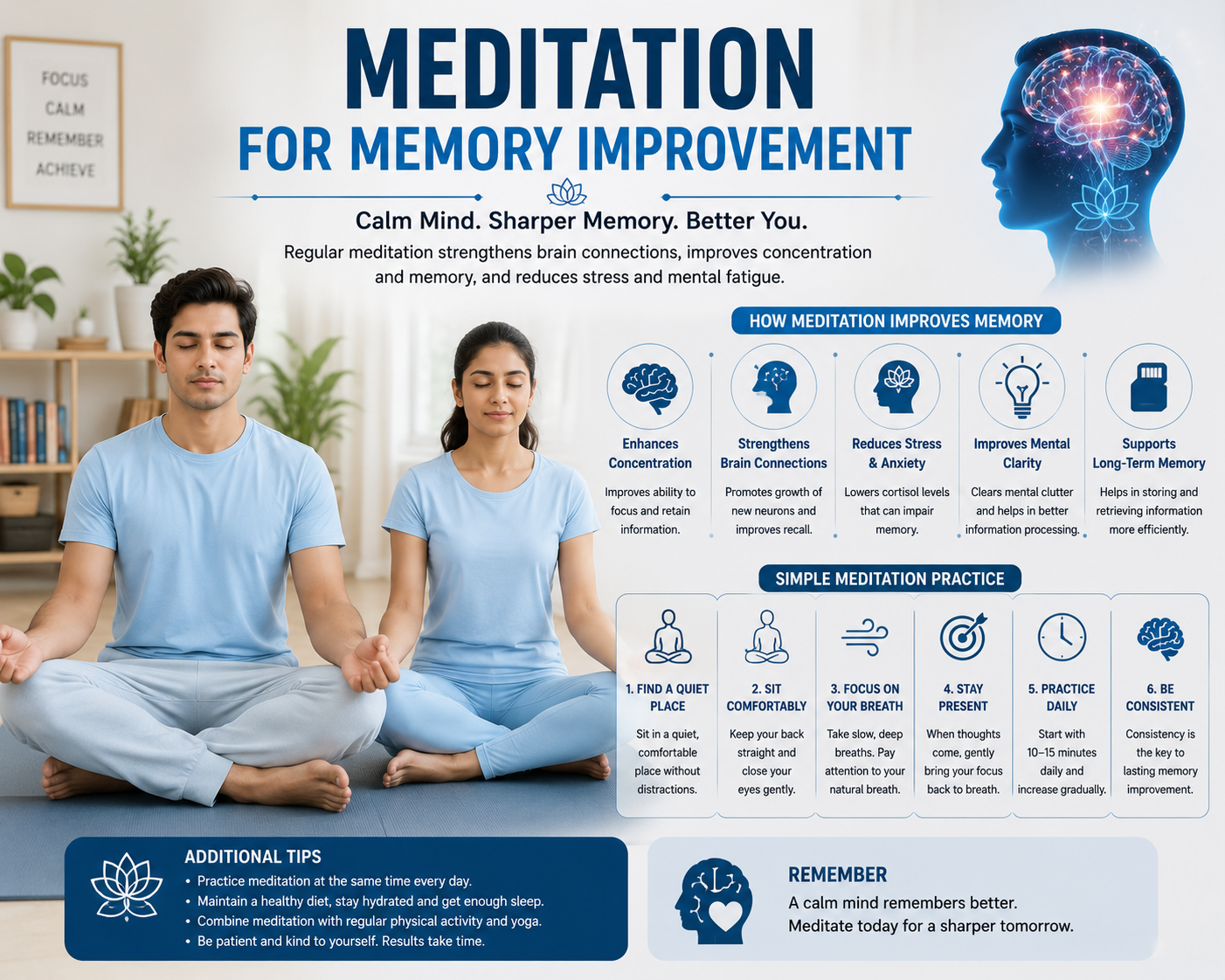
An informational guide to what meditation can and cannot do for memory — covering how memory actually works, which meditation techniques have genuine, evidence-aligned benefits for attention and recall, and where popular claims about meditation “curing” memory loss outpace the science.
Struggling to recall a name, losing track of where the keys went, or feeling generally foggy sends many people looking for ways to sharpen their memory, and meditation is often part of that search, sometimes marketed with claims that a daily practice can dramatically boost recall or reverse age-related memory decline. The more accurate picture is more modest: memory involves several distinct cognitive processes, including attention, encoding, consolidation, and retrieval, and no meditation practice rewires all of these processes overnight or reverses a diagnosed memory disorder.
What meditation can genuinely offer is support for attention and working memory, reduced stress-related interference with recall, and better sleep, all of which meaningfully affect how well memory functions day to day, a real and useful role that falls well short of the more dramatic claims often made about it. This guide walks through how memory actually works, where meditation has an evidence-aligned role in supporting it, and where popular claims go further than research supports. Meditation is not a substitute for medical care, and anyone experiencing new or worsening memory problems should treat it as a complement to, not a replacement for, proper medical evaluation.
1. How Memory Actually Works
Memory is not a single process but a collection of related ones. Attention determines what information gets noticed in the first place; encoding is the process of converting that information into a storable form; consolidation stabilises that information, often during sleep; and retrieval is the process of accessing it later. Working memory, the ability to hold and manipulate information over short periods, such as remembering a phone number just long enough to dial it, is distinct from long-term memory, which stores information over days, months, or years. Many everyday “memory problems” are actually attention problems, since information that was never properly noticed in the first place cannot be recalled later. Understanding this breakdown clarifies what meditation can realistically do: support the attentional and stress-related factors that affect memory performance, not act as a single switch that improves every stage of memory processing equally.
2. Why Claims That Meditation “Cures” Memory Loss Go Too Far
It is easy to find wellness content suggesting a specific meditation technique can dramatically boost memory or reverse age-related cognitive decline. These claims are not well supported. Memory changes with age, and more serious memory disorders such as dementia, involve underlying neurological processes that a meditation practice does not directly reverse. The more accurate picture is that meditation can be a genuinely helpful complementary practice for supporting attention, reducing stress-related interference with recall, and improving sleep, offering modest, real benefits without replacing appropriate medical evaluation for anyone experiencing new or concerning memory changes.
3. What the Research Actually Shows
Research on meditation and cognitive function has grown substantially, with a reasonably consistent body of evidence suggesting that regular mindfulness and focused-attention meditation is associated with modest improvements in working memory and sustained attention, particularly with consistent practice over weeks to months. Evidence specifically for meditation improving long-term memory recall is more mixed and generally smaller in effect than the attention-related findings. Some studies in older adults suggest meditation may support cognitive function as part of a broader healthy lifestyle, though this research is preliminary and should not be read as evidence that meditation prevents or treats dementia. The fair summary: meditation has genuine, evidence-aligned potential to support attention and working memory, which in turn supports everyday memory performance, while broader claims about meditation curing memory loss or preventing dementia outpace what has actually been studied.
4. Attention: The Foundation of Better Memory
Since information that is never properly attended to cannot be encoded or later recalled, attention training is arguably the most directly relevant meditation skill for everyday memory complaints. Focused-attention meditation, which involves repeatedly returning attention to a single point, such as the breath, trains exactly this capacity, and the modest improvements in sustained attention associated with regular practice may translate into better encoding of everyday information, from where the keys were placed to the name just heard at a gathering.
A gradual, structured approach to this kind of practice, of the sort covered in Pranayama for Stress Relief, offers a sensible starting point, since breath-focused techniques are often used as the foundation for building sustained attention.
5. Stress, Cortisol, and Memory Interference
Chronic stress is associated with sustained elevation of stress hormones such as cortisol, which can interfere with both encoding new information and retrieving previously stored memories, a phenomenon many people recognise as “going blank” under pressure. This is one of the more genuinely evidence-aligned connections between meditation and memory: not that meditation improves memory storage directly, but that its well-established stress-reduction effects may reduce the kind of stress-related interference that makes recall harder in the moment.
This relationship between stress and mental performance is explored further in Yoga for Stress Management, which looks more broadly at how yoga and meditation practice can support the nervous system under chronic stress.
6. Sleep, Consolidation, and Memory Formation
Memory consolidation, the process by which newly learned information becomes more stably stored, happens substantially during sleep, which is part of why poor sleep is so consistently linked to memory complaints. Meditation practices that support relaxation and easier sleep onset may offer indirect benefit for memory by supporting this well-established, sleep-dependent process.
This relationship between deep rest and cognitive function is discussed further in Yoga Nidra in Rishikesh, which explores how deep restorative practice supports the kind of rest memory consolidation depends on.
7. Meditation Techniques Commonly Used for Attention and Memory
Focused-attention meditation, which trains sustained concentration on a single object such as the breath, a mantra, or a candle flame, is among the most directly relevant techniques for attention-related memory support. Open-monitoring or mindfulness meditation, which involves observing thoughts and sensations without fixed focus, has more evidence for broader emotional regulation and stress reduction than for memory specifically. Mantra-based meditation, a long-standing traditional technique, combines repetition with sustained attention in a way that some practitioners find easier to sustain consistently than open awareness practices, particularly when starting out.
8. Practices and Situations to Approach With Caution
Meditation is generally gentle and low-risk, but a few situations warrant caution. Anyone experiencing new, sudden, or rapidly worsening memory problems, confusion, disorientation, or personality changes should be evaluated by a doctor promptly rather than addressing the concern with meditation alone, since these can signal conditions requiring medical diagnosis. Meditation is not a substitute for cognitive assessment, and treating memory changes solely as something to meditate away can delay appropriate medical evaluation. Some people, particularly those with a history of trauma or certain mental health conditions, may find intensive, prolonged meditation practice brings up difficult emotional material, so working with an experienced teacher and starting gradually is generally advisable.
9. Building a Safe, Realistic Practice
A meditation practice that genuinely supports memory looks consistent and modest, built around attention training rather than any single dramatic technique.
- Start with short, consistent sessions of focused-attention meditation, since consistency over weeks tends to matter more than session length.
- Pair meditation with adequate sleep, since consolidation depends heavily on sleep quality regardless of daytime practice.
- Use meditation to reduce stress-related interference with recall, particularly before situations that require remembering information under pressure.
- Learn foundational technique from a qualified teacher, ideally trained through a structured Yoga Teacher Training in Rishikesh programme, particularly if starting a sustained practice.
- Seek medical evaluation for any new or concerning memory changes rather than relying on meditation alone to address them.
10. Traditional Yogic Perspectives on Attention and Memory
In traditional yogic philosophy, sustained concentration, known as dharana, is described as a distinct stage of practice, generally understood as training the mind’s capacity to hold steady focus on a single object as a foundation for deeper meditative states. This traditional emphasis on cultivating sustained, stable attention aligns well with the modern evidence base linking focused-attention meditation to improvements in working memory and concentration.
Traditions such as Jnana & Karma Yoga in Rishikesh have long placed sustained attention and self-inquiry at the centre of practice, offering a traditional counterpart to the modern research on attention training and memory support.
The broader relationship between meditation practice and psychological wellbeing is discussed further in Yoga for Mental Health in Rishikesh, which looks at how meditation supports mental wellbeing more generally.
11. Red Flags in Meditation-for-Memory Claims
A few common red flags tend to signal claims about meditation and memory that outpace the evidence.
- Suggestions that a specific meditation technique can dramatically boost memory within days.
- Claims that meditation prevents or reverses dementia or Alzheimer’s disease.
- Encouragement to treat new or worsening memory problems with meditation instead of medical evaluation.
- Vague claims that a practice “unlocks” unused brain capacity without any explanation of the underlying mechanism.
12. Learning These Practices Properly
Because separating genuine, evidence-aligned attention training from overstated wellness marketing requires understanding both technique and the basic cognitive processes involved in memory, learning from a properly trained teacher makes a real difference.
A structured Yoga TTC India programme typically covers meditation and concentration practices alongside their traditional and physiological grounding, offering a more complete understanding of what these techniques can genuinely offer for attention and memory support.
Safety Notes and When to See a Doctor
Meditation can genuinely support attention, stress-related recall, and sleep, but it should never replace appropriate medical diagnosis or treatment for memory concerns.
- New, sudden, or rapidly worsening memory problems, confusion, or personality changes require prompt medical evaluation.
- Memory problems accompanied by difficulty with familiar tasks, disorientation, or language difficulties should be assessed by a doctor rather than managed with meditation alone.
- A family history of dementia or existing risk factors deserve discussion with a doctor about a comprehensive, individualised approach.
- Anyone with a history of trauma should approach intensive meditation practice gradually and, where relevant, with professional support.
Frequently Asked Questions (FAQs)
Q1. Can meditation cure memory loss?
No. Memory loss, particularly when linked to dementia or another diagnosed condition, involves neurological processes that meditation does not reverse. Meditation can support attention, stress-related recall, and sleep, but it does not replace medical evaluation and treatment.
Q2. What kind of meditation is best for memory?
Focused-attention meditation, which trains sustained concentration, has the most direct relevance to memory, since it strengthens the attentional foundation that everyday encoding and recall depend on.
Q3. How long does it take to see memory-related benefits from meditation?
Most research showing benefits for attention and working memory involves consistent practice over several weeks to months, rather than immediate or dramatic results from a single session.
Q4. Does meditation prevent dementia?
There is no strong evidence that meditation prevents dementia specifically. It may support broader brain-health factors like stress and sleep, but this is indirect and should not be understood as disease prevention.
Q5. Can stress really affect memory that much?
Yes, chronic stress and elevated stress hormones can interfere with both encoding new information and retrieving stored memories, which is part of why meditation’s stress-reduction effects may offer meaningful support for everyday recall.
Q6. Should meditation replace medical evaluation for memory concerns?
No. New or worsening memory problems should always be evaluated by a doctor, since they can have several possible causes, and meditation should be used alongside, not instead of, appropriate medical care.
Q7. What is the most evidence-based way to think about meditation’s role in memory?
The most accurate framing is that meditation supports attention, stress-related recall, and sleep, all of which meaningfully affect everyday memory performance, working alongside, not instead of, appropriate medical care for any diagnosed memory condition.
Final Thoughts
Memory depends on several distinct cognitive processes built on attention, stress regulation, and sleep, and the most honest, evidence-aligned view of meditation’s role is a supportive one: strengthening the attentional foundation memory depends on and easing the stress that interferes with recall, rather than curing memory loss or preventing dementia outright. This is a more modest picture than some wellness marketing suggests, but it is also a safer and more realistic one. Approached consistently, alongside appropriate medical care for any new or concerning memory changes, meditation can offer many people a genuinely useful, low-risk way to support their everyday attention and recall
