 Skip to content
An informational guide to Nadi Shodhana, or alternate nostril breathing — what it is, what the evidence says about its benefits, and a clear, step-by-step way to practise it safely as a beginner.
Nadi Shodhana, commonly known in English as alternate nostril breathing, is one of the most widely taught pranayama techniques in yoga, and for good reason. It is simple enough to learn in a single session, requires no equipment, and offers a genuinely calming, balancing effect that many practitioners notice within minutes of trying it. At the same time, it is often introduced with more mystique than clarity, leaving beginners unsure of what it actually does or how to do it correctly.
This guide sets out what Nadi Shodhana actually is, what current research and yogic tradition say about its effects, and a clear, step-by-step way to build it into a beginner-friendly practice.
1. What Is Nadi Shodhana?
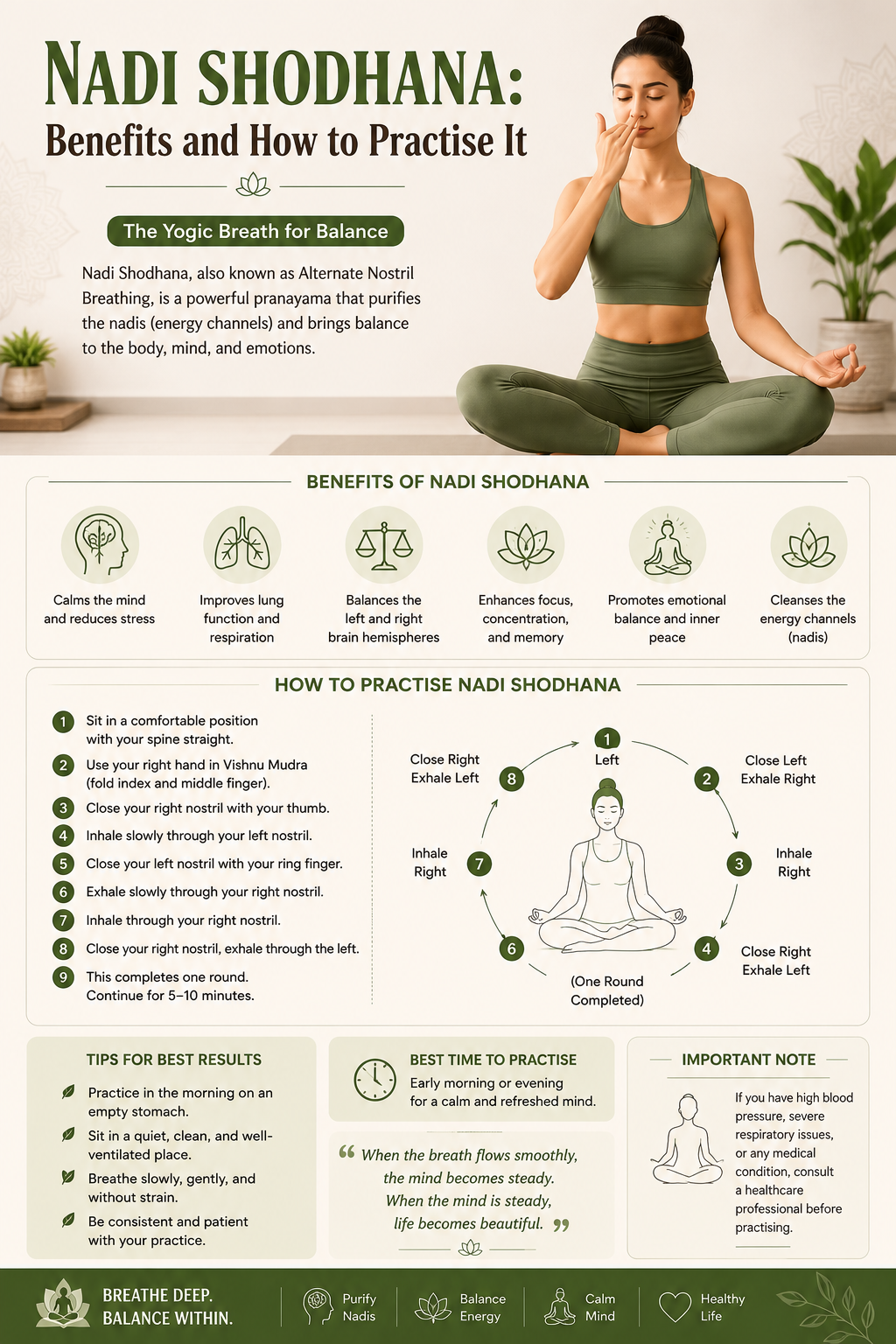
Nadi Shodhana is a seated breathing technique in which the practitioner alternates breathing through the left and right nostril, typically by gently closing one nostril at a time with the fingers. It belongs to pranayama, the breath-control limb of traditional yoga, and is considered one of the foundational techniques taught to beginners because it is accessible, low-intensity, and does not require advanced breath-holding ability to feel its effects.
2. The Meaning Behind the Name
In Sanskrit, nadi refers to a channel or pathway through which energy is said to flow through the body, and shodhana means purification or cleansing. Traditionally, the practice is described as clearing and balancing these channels, particularly the two associated with the left and right nostril, which are linked in yogic philosophy to calming and activating qualities respectively. Modern practitioners do not need to adopt this framework to benefit from the technique, but understanding it explains why the practice is often described as balancing rather than simply relaxing.
3. How Nadi Shodhana Affects the Nervous System
Beyond its traditional framing, Nadi Shodhana has a plausible physiological explanation for its calming effect. Slow, controlled breathing through alternating nostrils naturally lengthens and steadies the breath, which activates the parasympathetic nervous system, the body’s rest-and-recover mode. This can lower heart rate and ease muscle tension within a few minutes of practice. The added step of alternating nostrils also demands a degree of focused attention that tends to draw the mind away from repetitive, anxious thought patterns, adding a mental settling effect on top of the physical one.
4. What the Research Says
A number of small studies have examined Nadi Shodhana specifically, generally finding modest improvements in markers such as heart-rate variability, blood pressure, and self-reported calmness after regular practice. As with much of the research on individual pranayama techniques, sample sizes tend to be small and study quality varies, so the fair conclusion is that Nadi Shodhana appears to be a genuinely useful, low-risk complementary tool for everyday stress and focus, rather than a clinically proven treatment for any diagnosed condition.
5. The Benefits of Nadi Shodhana
Reported and observed benefits of a consistent Nadi Shodhana practice tend to cluster around a few consistent themes:
- A calming effect on the nervous system, useful before stressful situations or as a general stress-management tool.
- Improved focus and mental clarity, often used before study, work, or meditation.
- A sense of balance between alertness and relaxation, rather than either extreme.
- Support for a steadier, more settled state going into meditation or sleep.
- A low-intensity entry point into pranayama for people new to breathwork generally.
6. A Holistic View: Nadi Shodhana Alongside Other Practices
Nadi Shodhana rarely exists in isolation within traditional yogic practice; it is typically taught as one part of a broader approach to balance and wellbeing that also draws on diet, lifestyle, and rest. For readers interested in how breath-based practices like this one fit into a more complete, holistic framework, the Ayurveda and Yoga Retreat in India outlines how pranayama is commonly combined with Ayurvedic principles to support the nervous system and overall health more broadly.
7. Preparing to Practise: Posture and Setting
Nadi Shodhana is best practised seated, either cross-legged on the floor or upright in a chair, with the spine reasonably straight and the shoulders relaxed. A quiet space free of immediate distractions helps, especially for beginners still learning to coordinate the hand and breath. The right hand is most commonly used to alternate the nostrils, with the thumb closing the right nostril and the ring finger closing the left, though left-handed practitioners can adapt this comfortably.
8. Step-by-Step: How to Practise Nadi Shodhana
The basic technique can be learned in a single sitting. A simple beginner sequence looks like this:
- Sit comfortably with the spine upright and take a few natural breaths to settle.
- Close the right nostril gently with the thumb and inhale slowly through the left nostril.
- Close the left nostril with the ring finger, release the thumb, and exhale slowly through the right nostril.
- Inhale through the right nostril, then close it and exhale through the left, completing one full round.
- Continue this alternating pattern for five to ten rounds, keeping the breath slow and unforced throughout.
9. Beginner Variations for Those New to Breath Holds
More advanced versions of Nadi Shodhana introduce a brief breath hold between the inhale and exhale, but this is not necessary, and often not advisable, for complete beginners. A simple version without any holding, focusing purely on the alternating pattern and a smooth, even breath, is entirely sufficient to feel the calming and balancing effects the technique is known for, and it is the safer starting point for most new practitioners.
10. How Often and How Long to Practise
Five to ten minutes of Nadi Shodhana, practised once or twice a day, is generally enough for a beginner to notice a settling effect over time. Many practitioners find it particularly useful either first thing in the morning, as a way of starting the day with a clear and balanced mind, or shortly before a stressful task, meeting, or period of study. As with most breathwork, consistency over days and weeks tends to matter more than the length of any single session.
11. Nadi Shodhana and Meditation
Because it naturally quiets and steadies the breath, Nadi Shodhana is very commonly used as a short preparatory practice before seated meditation. A few minutes of alternate nostril breathing tends to make it noticeably easier to settle into stillness afterward, which is part of why the technique is so frequently taught alongside meditation instruction rather than as a stand-alone exercise.
12. Common Mistakes to Avoid
Beginners sometimes rush the pattern, breathing too quickly or forcing longer breath holds before the basic rhythm feels comfortable, which can produce light-headedness rather than calm. Others struggle with the hand position and become distracted by the mechanics rather than the breath itself. Practising slowly, without breath holds initially, and allowing the hand movements to become familiar before adding complexity, tends to produce a far more settling experience.
13. Learning Nadi Shodhana Properly: Why Guidance Matters
While the basic pattern of Nadi Shodhana is simple enough to learn from written instructions, correct pacing, posture, and progression genuinely benefit from proper guidance, particularly once breath holds or longer sessions are introduced. This is part of why pranayama techniques like this one are traditionally taught within a structured yoga setting. An explanation of Why Rishikesh is Called the Yoga Capital of the World offers useful context on why certain places have become associated with this kind of deep, properly guided pranayama instruction.
For beginners who want to build a genuinely solid, well-supervised foundation in Nadi Shodhana and pranayama more broadly, a guide to What to Expect from a 200 Hour Yoga Teacher Training in Rishikesh outlines how structured training typically introduces breathing techniques progressively, under supervision, rather than through short online tutorials alone.
For those wondering how a skill like Nadi Shodhana continues to develop beyond an initial training period, What to Expect After Completing Yoga Teacher Training gives a realistic picture of how pranayama and other foundational skills tend to deepen through ongoing, independent practice afterward.
14. Who Should Be Cautious With Nadi Shodhana
Nadi Shodhana without breath holds is broadly gentle and safe for most people, but caution is warranted for those with respiratory conditions, uncontrolled high blood pressure, or a history of panic attacks, particularly once breath-holding variations are introduced. Pregnant practitioners should stick to the gentle, hold-free version unless guided otherwise by a qualified teacher. If nasal congestion makes breathing through one side difficult, it is generally best to pause the practice rather than force airflow through a blocked nostril.
Frequently Asked Questions (FAQs)
Q1. What does Nadi Shodhana mean?
Nadi Shodhana translates roughly to “channel purification” in Sanskrit, referring to its traditional role in clearing and balancing the body’s energy pathways. In practice, it is a seated technique of breathing alternately through each nostril.
Q2. Is Nadi Shodhana safe for complete beginners?
Yes, the basic version without breath holds is considered gentle and low-risk, making it one of the most commonly recommended entry points into pranayama for people new to breathwork.
Q3. How long does it take to feel the effects of Nadi Shodhana?
Many practitioners notice a calming effect within a few minutes of a single session, though the fuller balancing and focus-related benefits tend to build with regular, consistent practice over days and weeks.
Q4. Can Nadi Shodhana be practised without a teacher?
The basic, hold-free version can generally be learned safely from clear written instructions, though proper guidance is recommended once breath holds or longer, more advanced sessions are introduced.
Q5. When is the best time to practise Nadi Shodhana?
Many practitioners favour the morning, as a way of starting the day settled and clear-headed, or shortly before a stressful task, though it can be practised at any time that suits a consistent routine.
Q6. Does Nadi Shodhana help with sleep?
Because it activates the body’s rest-and-recover response, some practitioners find a gentle version helpful in the evening as part of a wind-down routine, though it is not a specifically studied sleep treatment on its own.
Q7. Is Nadi Shodhana the same as box breathing?
No. Box breathing uses equal-count phases through both nostrils together, while Nadi Shodhana specifically alternates breathing between the left and right nostril. Both are calming techniques, but they work through slightly different mechanisms.
Final Thoughts
Nadi Shodhana offers a rare combination in the world of breathwork: a technique simple enough to learn in minutes, yet rich enough, both physiologically and traditionally, to reward years of continued practice. For a beginner, the safest and most useful starting point is the gentle, hold-free version, practised consistently for a few minutes a day.
Approached patiently, and ideally refined over time with proper guidance, Nadi Shodhana offers a genuinely balancing, low-risk tool that many practitioners come to rely on well beyond their first attempt.
