 Skip to content
An informational guide to how yoga influences blood pressure, what the evidence supports, and a set of safe, beginner-friendly practices for supporting cardiovascular health.
High blood pressure, or hypertension, is one of the most common chronic conditions worldwide, and much of its long-term management depends on daily habits rather than any single intervention. Yoga has become one of the more widely studied lifestyle tools in this space, not as a replacement for medical treatment, but as a complementary practice that can support the nervous system, circulation, and stress response in ways that meaningfully affect blood pressure over time.
This guide explains the relationship between yoga and blood pressure, what current research actually supports, and a set of specific, safe practices worth incorporating, along with clear guidance on what to avoid.
It is written for readers who already have some awareness of their blood pressure, whether through a recent diagnosis, a family history of hypertension, or simply an interest in more preventive, whole-body approaches to cardiovascular health. Nothing here is intended to replace individualised medical advice, but it can serve as a practical starting point for anyone curious about how a consistent yoga practice fits into a broader plan for managing blood pressure safely.
1. Understanding High Blood Pressure and Why Lifestyle Matters
Blood pressure reflects the force of blood against artery walls, and it is influenced by a combination of genetics, diet, activity levels, and the ongoing balance between the body’s stress and relaxation systems. For many people, especially those with mild to moderate hypertension, lifestyle factors play a substantial role alongside any prescribed medication. This is part of why structured, low-impact practices like yoga are increasingly recommended as a supportive addition to standard care rather than dismissed as unrelated to a primarily physiological condition.
It is also worth noting that hypertension often develops silently, with few or no noticeable symptoms until it has been present for some time. This is precisely why sustainable, low-risk daily habits, rather than occasional or intense interventions, tend to have the most meaningful long-term impact, and why a gentle practice like yoga fits naturally into ongoing management rather than functioning as a quick fix.
2. How Stress and the Nervous System Affect Blood Pressure
Chronic stress keeps the sympathetic nervous system, the body’s alert and “fight-or-flight” branch, more active than it should be for extended periods. This repeated activation is closely linked to sustained increases in blood pressure over time. Yoga works partly by engaging the parasympathetic nervous system, the counterbalancing “rest-and-digest” branch, through a combination of slow movement, controlled breathing, and sustained attention. Practised consistently, this shift toward parasympathetic dominance is one of the clearer physiological mechanisms behind yoga’s effect on blood pressure.
3. What the Evidence Actually Shows
A meaningful body of research has examined yoga’s effect on blood pressure, and the general pattern is encouraging: regular practice, particularly when it combines gentle movement, breathing exercises, and relaxation, is associated with modest but measurable reductions in both systolic and diastolic blood pressure. As with most lifestyle research, results vary depending on the type of yoga practised, session frequency, and individual health status, and yoga is best understood as a genuinely useful supportive tool rather than a standalone treatment for diagnosed hypertension.
It is worth noting that stress is rarely the sole driver of high blood pressure, but it is one of the few contributing factors a person can directly influence within a single session of practice. This is part of why yoga, and breath-focused practice in particular, is often highlighted specifically for its nervous-system effects rather than for any direct action on the cardiovascular system itself.
4. Gentle Pranayama Practices for Blood Pressure Support
Breath-focused practice is often where yoga’s effect on blood pressure is most direct. Slow, controlled breathing lowers heart rate and encourages the parasympathetic shift described above, often within minutes. For a closer look at specific breathing techniques and how they calm an overactive nervous system, Pranayama for Stress Relief offers a detailed, practice-focused guide that pairs well with the movement-based practices below.
A simple starting point is slow, even nasal breathing: inhaling and exhaling through the nose for an equal count, without straining, for five to ten minutes daily. Breath-holding techniques and forceful, rapid-breathing practices are generally unsuitable for anyone managing high blood pressure and are addressed further in Section 6.
5. Restorative and Supported Poses Worth Prioritising
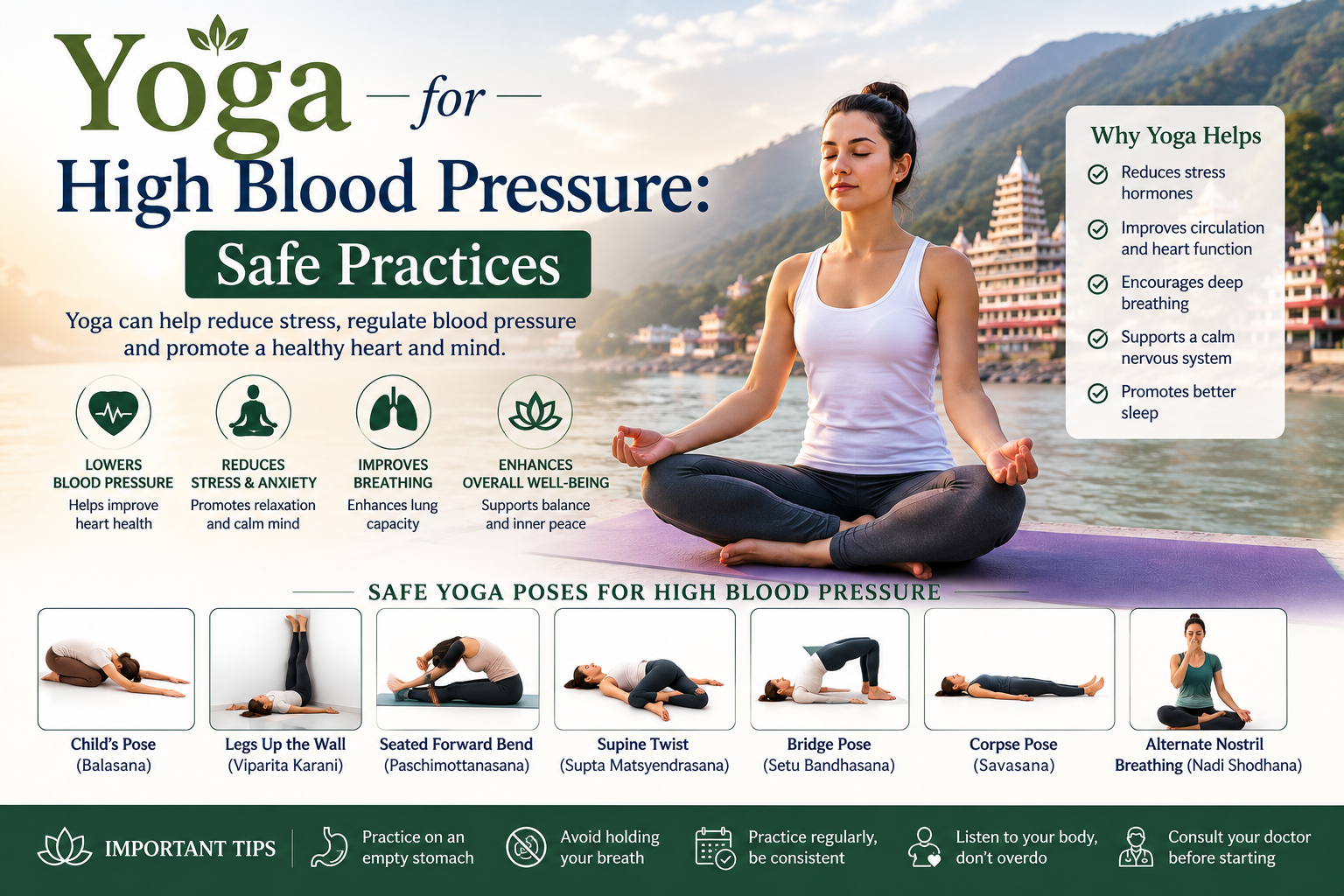
For people managing high blood pressure, the safest and most effective poses tend to be gentle, supported, and grounding rather than intense or inversion-based. Useful options include:
- Supported Reclining Bound Angle Pose, using cushions under the knees to fully release effort in the hips and lower back.
- Legs-Up-the-Wall Pose, which gently supports circulation without straining the heart or head.
- Seated Forward Fold, practised with a soft bend in the knees and support under the torso if needed.
- Child’s Pose, with the forehead supported so the head stays roughly level with the heart.
- Corpse Pose (Savasana), used at the end of every session to consolidate the nervous system’s shift toward calm.
These poses share a common feature: they are held passively, without muscular strain, and allow the breath to remain slow and unforced throughout.
6. Poses and Practices to Approach with Caution
Certain yoga practices can raise blood pressure sharply, even temporarily, and are generally best avoided or heavily modified by anyone with hypertension. These include full inversions such as headstands and shoulderstands, deep or unsupported backbends, and vigorous, fast-paced sequences that significantly elevate heart rate. Breath-holding practices and forceful breathing techniques, sometimes used in more advanced pranayama, can also cause sudden spikes and are not appropriate for this population without individualised guidance.
7. Building a Safe, Consistent Yoga Routine
A sustainable routine for blood pressure support does not need to be long or complex. A few general principles help build one that is both safe and effective:
- Begin sessions with a few minutes of slow, seated breathing before any movement.
- Favour gentle, restorative poses over strong or fast-paced sequences, particularly in the early weeks.
- Avoid sudden changes in position, especially moving quickly from lying down to standing.
- End every session with several minutes of Corpse Pose to allow blood pressure to settle fully.
- Practise at a consistent time, since regularity tends to matter more than session length.
8. Yoga, Anxiety, and Blood Pressure Together
Anxiety and elevated blood pressure frequently occur together, since both are closely tied to sustained sympathetic nervous system activation. For readers whose blood pressure concerns are closely linked to anxiety or a racing, overactive mind, Yoga for Panic Attacks looks specifically at how breath-based and grounding techniques help manage acute anxiety symptoms, which can be a useful companion to a general blood-pressure-focused practice.
9. Blood Pressure and Related Lifestyle Conditions
High blood pressure rarely exists in isolation. It frequently overlaps with other lifestyle-related conditions, particularly blood sugar imbalance, and the two often respond to similar underlying interventions such as stress reduction, gentle movement, and dietary awareness. For readers managing both concerns, Yoga for Diabetes Management explores how a similar style of practice can support healthier blood sugar levels alongside cardiovascular health.
10. Common Mistakes That Undermine Safe Practice
The most common mistake is treating yoga as a vigorous workout rather than a calming, regulatory practice, particularly in the early stages of managing high blood pressure. Holding poses with visible strain, rushing between positions, or attempting advanced inversions without guidance can all work against the intended effect. Another frequent issue is stopping medication or medical monitoring on the assumption that yoga alone is sufficient; the two are meant to work together, not as substitutes for one another.
11. When Yoga Alone Isn’t Enough
For some people, elevated blood pressure is driven by factors that a physical practice alone cannot fully address, including diet, sleep quality, genetics, or other underlying health conditions. In these cases, yoga functions best as one part of a broader, medically supervised plan rather than a complete solution. Anyone with diagnosed hypertension should continue regular monitoring and follow guidance from a healthcare professional alongside any yoga practice.
12. Learning These Practices Properly
Because certain poses and breathing patterns can raise blood pressure if performed incorrectly, learning this style of practice under qualified guidance is particularly valuable for anyone managing hypertension. Structured training, such as the 200 Hours YTTC Rishikesh India, covers not only the practices themselves but the underlying anatomy and physiology, which is especially useful for understanding which techniques are appropriate for cardiovascular conditions and which should be modified or avoided.
13. Who Should Be Cautious With Yoga for High Blood Pressure
Yoga is broadly safe for most people with well-managed hypertension, but those with very high or unstable blood pressure, a recent cardiovascular event, or other significant heart conditions should consult a healthcare professional before beginning any new practice. Pregnant individuals and those with glaucoma or retinal conditions should also seek guidance before attempting inversions or breath-holding techniques. Persistent or poorly controlled high blood pressure should always be addressed medically, with yoga used as a supportive addition rather than a first-line treatment.
It can also be useful to track how the body responds over time, noting energy levels, sleep quality, and general tension alongside any blood pressure readings taken through a doctor or home monitor. This kind of simple, ongoing awareness helps distinguish which elements of a routine are genuinely helpful from those that may need adjusting, and keeps the practice grounded in what the body is actually experiencing rather than general assumptions about what should be working.
14. Building Long-Term Heart Health Through Yoga
The value of yoga for blood pressure tends to build gradually rather than appear overnight. Consistent, gentle practice over weeks and months supports the nervous system regulation, stress reduction, and circulatory benefits that contribute to healthier blood pressure over the long term. Combined with other supportive habits, such as regular movement, adequate sleep, and mindful eating, yoga becomes one part of a broader, sustainable approach to cardiovascular health.
Frequently Asked Questions (FAQs)
Q1. Can yoga actually lower blood pressure?
Regular, gentle yoga practice is associated with modest reductions in blood pressure for many people, largely through reduced stress and improved nervous system regulation, though results vary and it should be used alongside, not instead of, medical care.
Q2. Which yoga poses are safest for high blood pressure?
Gentle, supported poses such as Legs-Up-the-Wall, supported forward folds, and Corpse Pose are generally considered safest, since they avoid strain and support a calm nervous system response.
Q3. Are inversions like headstands safe with high blood pressure?
Full inversions can cause sharp, temporary increases in blood pressure and are generally not recommended for people with hypertension unless specifically cleared and guided by a qualified instructor.
Q4. How often should someone with high blood pressure practise yoga?
Most guidance suggests three to five sessions per week of twenty to thirty minutes, with consistency mattering more than session length or intensity.
Q5. Can breathing exercises alone help manage blood pressure?
Slow, controlled breathing can meaningfully support blood pressure regulation on its own, and is often one of the most accessible starting points for people new to yoga.
Q6. Should yoga replace blood pressure medication?
No. Yoga is a supportive practice, not a replacement for prescribed medication or medical monitoring, and any changes to treatment should only be made in consultation with a healthcare professional.
Q7. How soon might someone notice a difference?
Some people notice reduced tension and improved relaxation within the first few sessions, but measurable changes in blood pressure typically develop gradually over several weeks of consistent practice.
Final Thoughts
Yoga offers a genuinely evidence-supported, low-risk way to support healthy blood pressure, particularly when practised gently, consistently, and with attention to which techniques are appropriate for cardiovascular health. Used as part of a broader lifestyle approach, and alongside proper medical guidance where needed, it can be a valuable long-term companion for anyone working to manage high blood pressure safely.
