 Skip to content
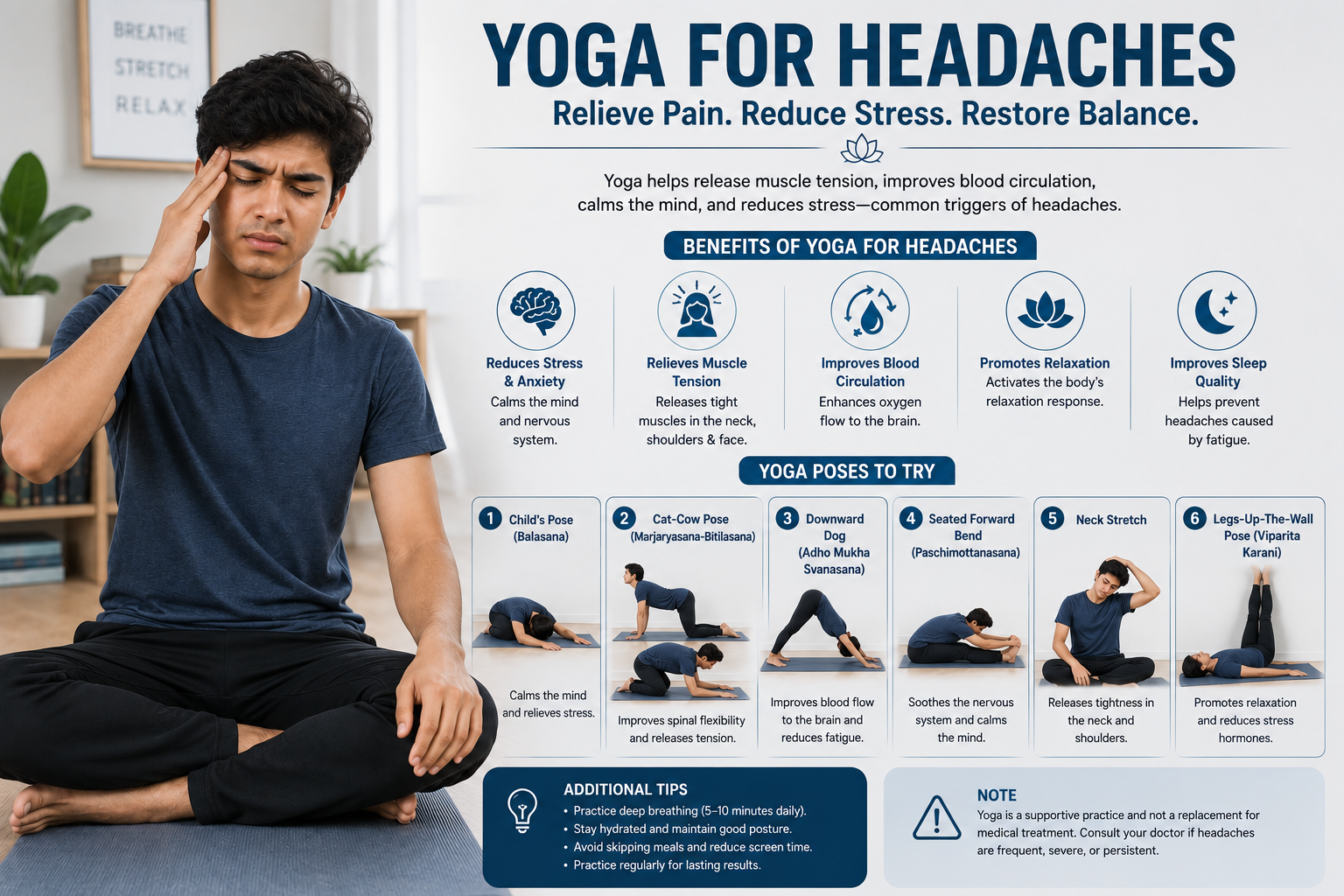
An informational guide to what yoga can and cannot do for headaches — covering the different types of headache, where posture, breath, and stress-focused practices genuinely help, and where popular claims about yoga “curing” headaches outpace the evidence.
A dull band of pressure around the head, an ache creeping up the back of the neck, or a throb behind the eyes sends many people looking for natural relief, and yoga is often part of that search, sometimes marketed with claims that a particular stretch or breathing pattern can eliminate headaches for good. The more accurate picture is more modest: headaches have several distinct underlying causes, ranging from muscular tension to vascular and neurological factors, and no single yoga practice addresses all of them, or guarantees a headache-free life.
What yoga can genuinely offer is support for the muscular tension, posture habits, and stress that frequently contribute to the most common type of headache, alongside general relaxation benefits, a real and useful role that falls well short of a universal cure. This guide walks through the different types of headache, where yoga has an evidence-aligned role in supporting people who deal with them, and where popular claims about yoga curing headaches go further than the science supports. Yoga is not a substitute for medical care, and anyone with frequent, severe, or changing headache patterns should treat it as a complement to, not a replacement for, proper diagnosis and treatment.
1. The Different Types of Headache, and Why That Matters
Not all headaches share the same cause, which is part of why a single yoga technique cannot address all of them equally. Tension-type headaches, the most common form, generally involve muscular tension in the neck, shoulders, and scalp, often linked to posture, stress, or prolonged screen use. Migraine is a distinct neurological condition involving changes in brain activity and blood vessels, generally accompanied by more intense, one-sided pain and additional symptoms such as light or sound sensitivity. Cluster headaches involve severe, one-sided pain around the eye, often in clusters over weeks, and cervicogenic headaches originate from problems in the neck itself. Understanding which type of headache is most relevant clarifies what yoga can realistically do: yoga’s evidence base is strongest for tension-type headache and stress-related headache patterns, not for every category of head pain.
2. Why Claims That Yoga “Cures” All Headaches Go Too Far
It is easy to find wellness content suggesting a particular pose or breathing sequence can eliminate headaches of any kind. These claims are not well supported. Headaches with a vascular, neurological, or structural cause are not something a stretch or breathing pattern reverses directly, and lumping all headache types together overstates what any single practice can do. The more accurate picture is that yoga, particularly practices addressing posture, muscular tension, and stress, can be a genuinely helpful complementary approach for the most common tension-type and stress-related headaches, offering modest, real benefits without replacing appropriate medical evaluation for recurrent or severe headache patterns.
3. What the Research Actually Shows
Research on yoga for tension-type headache and general headache frequency is reasonably encouraging, with several small studies suggesting that regular yoga practice, including gentle stretching, posture work, and relaxation techniques, is associated with reduced headache frequency and intensity for some people, generally as an adjunct to standard care. Evidence specifically for yoga’s effect on migraine and cluster headache is more limited and is generally studied as a complementary addition to medical treatment rather than a standalone solution. The fair summary: yoga has genuine, evidence-aligned potential for tension-type and stress-related headaches in particular, while broader claims about yoga curing all headache types outpace what has actually been studied.
4. Posture, Screen Time, and Tension Headaches
Prolonged forward head posture, common with extended screen use, places sustained strain on the muscles at the base of the skull and along the neck and shoulders, a pattern strongly associated with tension-type headache for many people. Yoga postures that gently counteract this pattern, such as chest-opening stretches, shoulder rolls, and neck-lengthening movements, can offer meaningful relief for headaches linked to posture and prolonged sitting. This is one of the more genuinely evidence-aligned uses of yoga for headache: not a cure for headache in general, but a targeted response to a well-understood mechanical contributor for the most common type.
5. Breathing Practices and Headache Relief
Slow, diaphragmatic breathing does not address a structural or vascular cause of head pain directly, but it can support a calmer nervous system and ease some of the muscular tension that accompanies stress-related headaches for many people.
A gradual, structured approach to this kind of breath work, of the sort covered in Pranayama for Stress Relief, offers a sensible starting point for building the kind of calm, controlled breathing that supports overall tension release.
6. Postures Often Discussed for Headache Relief
Certain postures are frequently mentioned for headache relief, generally because a change in neck, shoulder, and spine positioning can ease the muscular tension that underlies many tension-type headaches. Gentle neck stretches, supported forward folds, and restorative postures that release the shoulders and upper back are commonly suggested, while vigorous or intense practice is often less comfortable during an active headache. Evidence for any specific posture directly resolving headache is limited, and the right choice varies by individual and by headache type, so noticing how a pose actually feels and adjusting accordingly is safer than assuming any pose is universally beneficial.
7. Stress, Emotional Tension, and Headache Frequency
Stress is one of the most commonly reported headache triggers, and there is a documented relationship between muscular tension, the autonomic nervous system, and headache frequency for many people, particularly with tension-type headache. This is one of the more genuinely evidence-aligned connections between yoga and headache: not that yoga treats every underlying cause directly, but that its well-established stress-reduction and relaxation effects may reduce how often stress and muscular tension accumulate into a headache for some practitioners.
This relationship between emotional steadiness and physical tension is explored further in Yoga for Emotional Balance, which looks more broadly at how yoga practice can support a steadier baseline over time.
For people whose headaches are compounded by chronic overwork or exhaustion, Yoga for Burnout Recovery looks specifically at how restorative practice can support recovery from prolonged fatigue and depleted energy.
8. Practices and Situations to Approach With Caution
Not every yoga practice suits every headache. Vigorous, forceful breathing techniques and full inversions are generally best avoided during an active headache, since intense practice or significant changes in blood flow to the head can feel uncomfortable or worsen symptoms for some people. Cervicogenic headaches, which originate from the neck, may require individual guidance on which neck movements are appropriate, since certain stretches could aggravate an underlying neck issue rather than ease it. A sudden, severe headache described as “the worst headache of your life,” a headache with fever, stiff neck, confusion, vision changes, weakness, or difficulty speaking, or a new headache pattern after age fifty are all signals to seek urgent medical evaluation rather than attempting a yoga practice.
9. Building a Safe, Realistic Routine
A yoga routine that genuinely supports headache management looks gentle and consistent, targeting posture, tension, and stress rather than promising a universal cure.
- Practise gentle neck, shoulder, and upper-back stretches regularly, particularly if screen time or desk posture is a contributing factor.
- Use slow, diaphragmatic breathing to support relaxation during moments of building tension.
- Avoid vigorous or forceful practice during an active headache, favouring restorative postures instead.
- Learn a tailored sequence from a qualified teacher, ideally trained through a structured Yoga Teacher Training in Rishikesh programme, particularly if neck issues are involved.
- Track headache patterns and triggers alongside practice, since management tends to work best as a combination of several factors rather than any single technique.
10. Traditional Yogic Perspectives on Head and Neck Tension
Traditional yogic and Ayurvedic approaches to head pain have long included gentle neck and shoulder work, breath regulation, and lifestyle balance, generally framed around easing accumulated tension and supporting overall nervous system regulation rather than targeting a single physiological mechanism. While these traditions use different language than modern medicine, the underlying emphasis on posture, unforced movement, and stress regulation aligns reasonably well with the evidence-based, tension-focused approach described throughout this guide.
A structured Best Yoga School in Rishikesh typically teaches this kind of gentle, restorative sequencing alongside the anatomical grounding needed to adapt neck and shoulder work sensibly for people managing recurrent headaches.
11. Red Flags in Yoga-for-Headache Claims
A few common red flags tend to signal claims about yoga and headaches that outpace the evidence.
- Suggestions that a single posture or breathing technique can cure all types of headache without medical evaluation.
- Encouragement to stop prescribed headache medication in favour of a yoga-based programme.
- Vigorous neck stretches or inversions recommended without any caution for people with cervicogenic headache or neck issues.
- Vague claims that a sequence “releases toxins” causing headaches, without any explanation of the underlying mechanism.
12. Learning These Practices Properly
Because adapting yoga safely for headache management requires understanding both technique and the different underlying causes of head pain, learning from a properly trained teacher makes a real difference.
A structured Yoga TTC India programme typically covers postural anatomy and breath work alongside broader yogic philosophy, offering a grounded understanding of what these techniques can genuinely offer people managing recurrent headaches.
Safety Notes and When to See a Doctor
Yoga and related posture, breath, and stress-focused practices can genuinely support headache management, but they should never replace appropriate medical diagnosis or treatment.
- A sudden, severe headache described as the worst of your life requires urgent medical attention.
- Headache with fever, stiff neck, confusion, vision changes, weakness, or difficulty speaking requires immediate medical evaluation.
- Frequent headaches, or headaches that interfere significantly with daily life, deserve evaluation by a doctor to identify the underlying type and appropriate treatment.
- A new or significantly changed headache pattern, particularly after age fifty, should be evaluated by a doctor.
Frequently Asked Questions (FAQs)
Q1. Can yoga cure headaches completely?
Not universally. Headaches have several distinct causes, and yoga’s evidence base is strongest for tension-type and stress-related headache, where it can meaningfully reduce frequency and intensity, though it does not replace medical evaluation for recurrent or severe headaches.
Q2. Which type of headache does yoga help with most?
Tension-type headache, since yoga’s postural, muscular, and stress-reduction effects directly address common contributing factors like poor posture and accumulated tension.
Q3. Are yoga inversions good for headaches?
Generally not recommended during an active headache, since intense practice or changes in blood flow to the head can feel uncomfortable or worsen symptoms for some people, particularly with migraine.
Q4. Can posture really cause headaches?
Yes, prolonged forward head posture from extended screen use is a well-recognised contributor to tension-type headache, and yoga postures that counteract this pattern can offer meaningful relief for many people.
Q5. Can stress management alone stop headaches?
Not entirely, since some headache types have other underlying causes, but stress and muscular tension are common contributors, and yoga’s well-documented relaxation effects may reduce how often they build into a headache.
Q6. Can yoga replace headache medication?
No. Frequent or severe headaches generally require appropriate medical evaluation and treatment, and yoga should never be used as a substitute for prescribed medication when a doctor determines it is needed.
Q7. What is the most evidence-based way to think about yoga’s role in headaches?
The most accurate framing is that yoga, particularly posture work, gentle stretching, and stress-reduction practice, can meaningfully support tension-type and stress-related headache management, working alongside, not instead of, appropriate medical care for other headache types.
Final Thoughts
Headaches have several distinct underlying causes, and the most honest, evidence-aligned view of yoga’s role is a supportive one: helping ease muscular tension, improve posture, and manage the stress that often triggers the most common type of headache, rather than curing every form of head pain. This is a more modest picture than some wellness marketing suggests, but it is also a safer and more realistic one.
Approached gradually, alongside appropriate medical guidance for frequent, severe, or changing headache patterns, yoga and related posture and stress-focused practices can offer many people a genuinely useful, low-risk way to support day-to-day comfort.
