 Skip to content
An informational guide to what Anulom Vilom (alternate nostril breathing) can and cannot do — covering how the practice actually affects the body and nervous system, where its genuine, evidence-aligned benefits lie, and where popular claims about it as a cure-all outpace the science.
Anulom Vilom, commonly known as alternate nostril breathing, is one of the most widely practised pranayama techniques, often introduced early in yoga classes and just as often marketed with sweeping claims that it can balance both sides of the brain, purify the nervous system, or cure everything from anxiety to high blood pressure to sinus problems. The more accurate picture is more modest: Anulom Vilom is a slow, structured breathing pattern that alternates airflow between the nostrils, and while it has some genuinely interesting, evidence-aligned effects on the nervous system, it does not rewire brain hemispheres or cure diagnosed medical conditions on its own.
What Anulom Vilom can genuinely offer is a simple, accessible way to slow the breath, support a calmer nervous system, and build a few minutes of focused attention into the day, a real and useful role that falls well short of the more dramatic claims often made about it. This guide walks through how Anulom Vilom actually works, where it has an evidence-aligned role, and where popular claims go further than research supports. It is not a substitute for medical care, and anyone with a diagnosed health condition should treat it as a complement to, not a replacement for, appropriate diagnosis and treatment.
1. What Anulom Vilom Actually Is and How It Works
Anulom Vilom, often used interchangeably with the closely related technique Nadi Shodhana, involves closing one nostril at a time using the fingers and breathing slowly and evenly, alternating which nostril is used for inhalation and exhalation in a set pattern. Unlike Kapalabhati, which is rapid and forceful, Anulom Vilom is deliberately slow, smooth, and unforced, which is part of why it sits at the calming end of the pranayama spectrum. Physiologically, slow, controlled nasal breathing of this kind is associated with activation of the parasympathetic nervous system, the branch of the autonomic nervous system associated with rest and recovery, which is the mechanism most plausibly behind the calming effect many practitioners report. Claims that alternating nostrils directly balances the brain’s two hemispheres are based on an older, largely unsupported theory rather than robust neuroscience, and modern research on the technique focuses instead on its documented autonomic and stress-related effects.
2. Why Claims That Anulom Vilom “Cures” Disease Go Too Far
It is easy to find wellness content suggesting Anulom Vilom cures high blood pressure, resolves chronic sinus problems, reverses diabetes, or treats serious mental health conditions on its own. These claims are not well supported. Conditions such as hypertension, diabetes, and clinical anxiety disorders involve physiological processes that a breathing pattern does not directly reverse, even when the breathing pattern has a genuinely calming, supportive effect. The more accurate picture is that Anulom Vilom can be a helpful complementary practice for stress and general relaxation, offering modest, real benefits without replacing appropriate medical evaluation and treatment for any diagnosed condition.
3. What the Research Actually Shows
Research on alternate nostril breathing is more developed than on many other single pranayama techniques, with a number of small studies suggesting short-term reductions in heart rate, blood pressure, and self-reported stress and anxiety following practice, alongside some evidence of improved attention and cognitive performance in certain populations. Much of this research involves small sample sizes and short study durations, so the evidence should be read as promising and preliminary rather than definitive, particularly for any claim about treating a diagnosed medical condition. The fair summary: Anulom Vilom has genuine, evidence-aligned short-term benefits for relaxation and autonomic balance, while broader claims about disease reversal or hemispheric brain balancing outpace what has actually been studied.
4. How Anulom Vilom Is Traditionally Practised
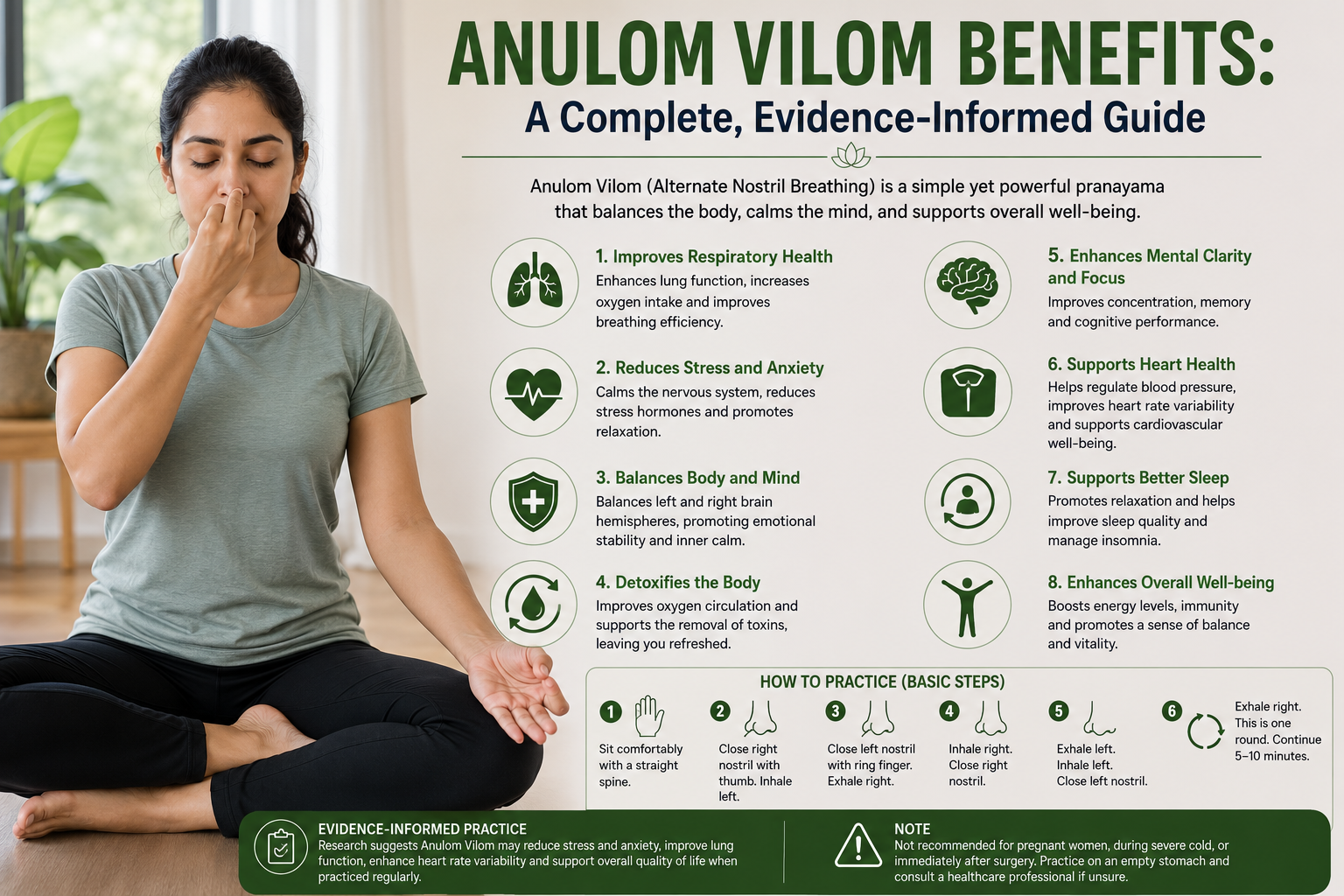
Anulom Vilom is traditionally practised seated comfortably with a tall spine, using the right thumb to close the right nostril while inhaling slowly through the left, then closing the left nostril with the ring finger to exhale through the right, before inhaling through the right and exhaling through the left to complete one round. The breath throughout is slow, smooth, and unforced, generally without breath retention for beginners, and practice typically continues for five to ten rounds or a few minutes, building gradually with experience.
A gradual, structured approach to this kind of practice, of the sort covered in Pranayama for Stress Relief, offers a sensible starting point, since it builds calm, controlled breathing skills that make techniques like Anulom Vilom easier to learn well.
5. Genuine, Evidence-Aligned Benefits Worth Noting
Set against the more modest evidence base, several benefits of Anulom Vilom are reasonably well supported. Regular practice is associated with short-term reductions in perceived stress and a subjective sense of calm for many practitioners, consistent with its parasympathetic-activating effect. Some studies suggest modest improvements in attention and reaction time following practice, which may relate to the focused, rhythmic nature of the technique. Slow nasal breathing of this kind is also associated with a small, temporary reduction in heart rate and blood pressure during the practice itself for many people, though this should not be understood as a treatment for diagnosed hypertension.
6. Anulom Vilom for Stress and Emotional Regulation
Of all its uses, Anulom Vilom’s role in supporting stress management and emotional regulation has some of the more consistent evidence behind it, since slow, alternating nasal breathing gives the mind a simple, repetitive focus point while calming the nervous system. This does not resolve the underlying cause of stress or an anxiety disorder, but it can be a genuinely useful in-the-moment tool alongside other coping strategies and, where relevant, professional support.
This connection between breath and emotional steadiness is explored further in Yoga for Emotional Balance, which looks more broadly at how yoga practice can support a steadier emotional baseline over time.
The wider relationship between breath-focused practice and psychological wellbeing is also discussed in Yoga for Mental Health, which examines how breathing techniques can support people managing acute anxious states.
7. Practices and Situations to Approach With Caution
Anulom Vilom is generally considered gentle and low-risk for most healthy adults, but a few situations warrant caution. Anyone with significant nasal congestion or a sinus infection may find it difficult to breathe through one nostril at a time comfortably, and forcing the breath through a blocked nostril is unnecessary and unhelpful. People with severe respiratory or cardiac conditions should check with a doctor before beginning any structured pranayama practice, since even gentle techniques may need individual adaptation. Beginners should avoid rushing the pace or holding the breath for extended periods without proper guidance, since forcing breath retention prematurely can cause dizziness or discomfort.
8. Building a Safe, Realistic Practice
An Anulom Vilom practice that genuinely supports wellbeing looks simple, consistent, and unforced rather than elaborate or rushed.
- Practise seated comfortably with a tall spine, keeping the breath slow, smooth, and unforced throughout.
- Start with five to ten rounds and build gradually rather than attempting long sessions immediately.
- Skip or modify the practice during significant nasal congestion rather than forcing breath through a blocked nostril.
- Learn the technique first from a qualified teacher, ideally through a structured Yoga Teacher Training in Rishikesh programme, particularly before adding breath retention.
- Treat consistency over weeks as more valuable than intensity in any single session.
9. Traditional Yogic Perspectives on Anulom Vilom
In traditional hatha yoga texts, alternate nostril breathing is closely tied to the concept of nadis, the subtle energy channels said to run through the body, with the practice traditionally understood as balancing the flow of energy between them. While this traditional framework uses different language than modern physiology, the underlying emphasis on slow, deliberate, balanced breathing aligns reasonably well with the evidence-based understanding of the technique’s calming, autonomic-balancing effect.
Traditions such as Kundalini Yoga in Rishikesh often teach Anulom Vilom within this fuller traditional context, alongside guidance on sequencing, pacing, and how it relates to other pranayama and meditative practices.
10. Red Flags in Anulom Vilom Marketing Claims
A few common red flags tend to signal claims about Anulom Vilom that outpace the evidence.
- Suggestions that Anulom Vilom cures hypertension, diabetes, or other diagnosed medical conditions without treatment.
- Claims that alternating nostrils directly rewires or balances the brain’s two hemispheres.
- Encouragement to hold the breath for long periods early in practice without any mention of gradual progression or risk.
- Vague claims that the practice “purifies the nervous system” without any explanation of the underlying mechanism.
11. Learning This Practice Properly
Because separating genuine, evidence-aligned benefit from overstated wellness marketing requires understanding both technique and basic respiratory and nervous-system physiology, learning from a properly trained teacher makes a real difference.
A structured programme at a Best Yoga School in Rishikesh typically covers Anulom Vilom alongside its physiological basis and traditional context, offering a grounded understanding of what the technique can genuinely offer.
Safety Notes and When to See a Doctor
Anulom Vilom can genuinely support relaxation and stress management for many people, but it should never replace appropriate medical diagnosis or treatment.
- Diagnosed hypertension, cardiac conditions, or respiratory disease warrant guidance from a clinician before beginning structured pranayama practice.
- Significant nasal congestion or sinus infection is a reason to skip or modify the practice rather than force it.
- Persistent dizziness, lightheadedness, or anxiety during practice is a signal to stop and return to normal breathing.
- Anyone using breathwork to manage a diagnosed anxiety or mood condition should continue working with a mental health professional alongside any breathing practice.
Frequently Asked Questions (FAQs)
Q1. Does Anulom Vilom cure high blood pressure or diabetes?
No. These are diagnosed medical conditions requiring appropriate treatment. Anulom Vilom may offer short-term relaxation and small temporary reductions in heart rate and blood pressure during practice, but it does not replace medical management.
Q2. Does alternate nostril breathing really balance the two sides of the brain?
This traditional claim is not well supported by modern neuroscience. The more evidence-based explanation for Anulom Vilom’s calming effect is its activation of the parasympathetic nervous system rather than any direct hemispheric balancing.
Q3. How long should a beginner practise Anulom Vilom?
Five to ten slow, comfortable rounds is a reasonable starting point, building gradually over weeks. Rushing the pace or holding the breath for long periods early on is unnecessary and can cause dizziness.
Q4. Is Anulom Vilom safe for everyone?
It is generally gentle and low-risk for healthy adults, but anyone with significant nasal congestion, diagnosed cardiac or respiratory conditions, or who feels dizzy during practice should modify or pause the technique and seek individual guidance.
Q5. Can Anulom Vilom help with anxiety?
It may offer short-term, in-the-moment calming support for some people by activating the parasympathetic nervous system, but it does not treat a diagnosed anxiety disorder and works best alongside, not instead of, appropriate professional support when needed.
Q6. What is the difference between Anulom Vilom and Kapalabhati?
Anulom Vilom is a slow, calming technique that alternates nostrils with an even breath, while Kapalabhati is a rapid, forceful technique using sharp exhalations through both nostrils, sitting at the stimulating rather than calming end of the pranayama spectrum.
Q7. What is the most evidence-based way to think about Anulom Vilom’s benefits?
The most accurate framing is that Anulom Vilom offers genuine, short-term support for relaxation, stress reduction, and focused attention, working alongside, not instead of, appropriate medical or psychological care for any diagnosed condition.
Final Thoughts
Anulom Vilom is a simple, accessible breathing practice with real, evidence-aligned benefits for short-term relaxation and stress management, and the most honest view of its role sits well short of the disease-curing and brain-balancing claims often attached to it. This is a more measured picture than some wellness marketing suggests, but it is also a more realistic and sustainable one.
Approached consistently, with reasonable expectations and appropriate medical guidance for any diagnosed condition, Anulom Vilom can offer many people a genuinely useful, low-risk way to build a few calming minutes into an otherwise busy day.
