 Skip to content
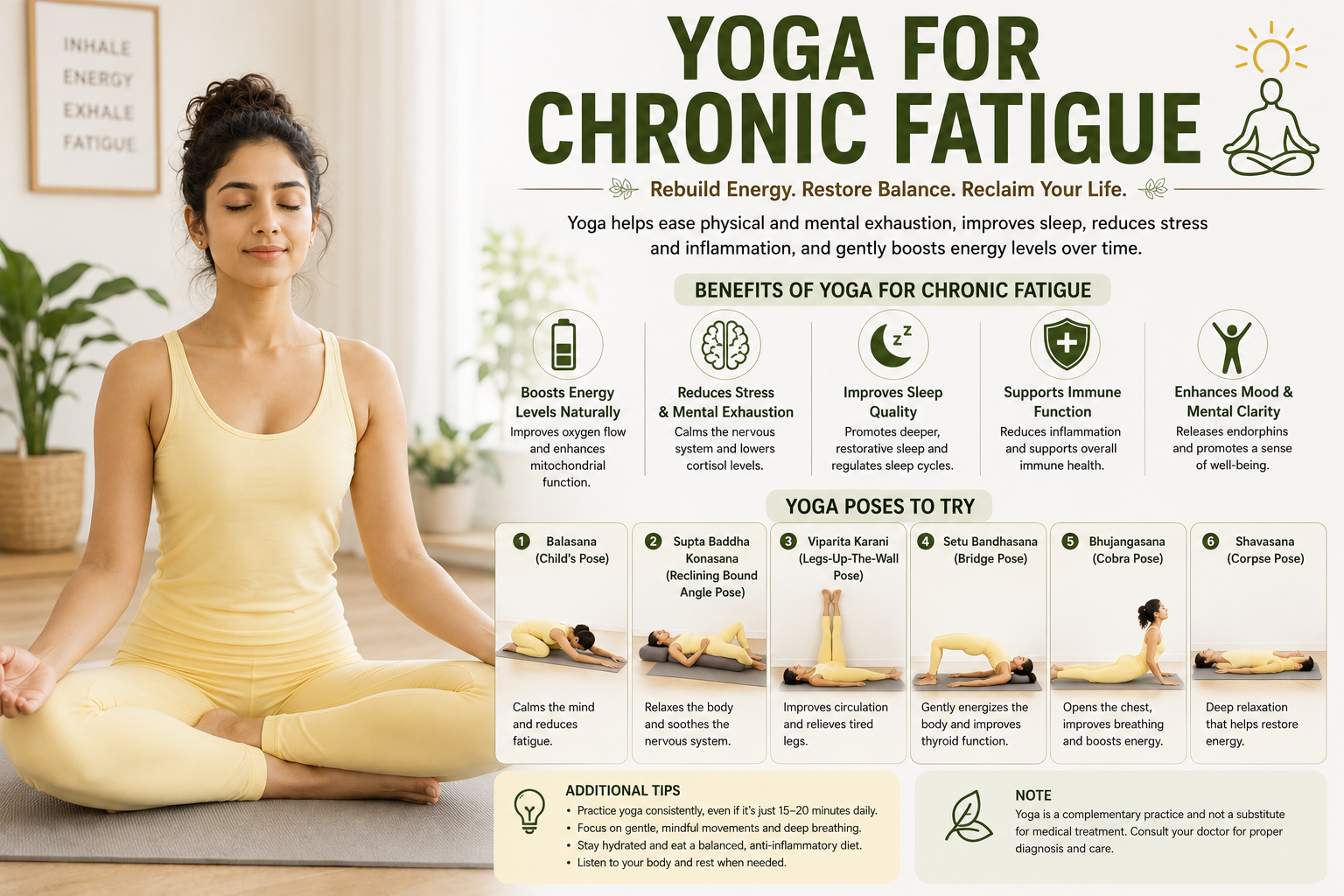
An informational guide to what yoga can and cannot do for chronic fatigue — covering the difference between everyday tiredness and diagnosed conditions like chronic fatigue syndrome (ME/CFS), where gentle, pacing-aware practice genuinely helps, and where popular claims about yoga “curing” chronic fatigue outpace the evidence.
Persistent exhaustion that does not lift with a good night’s sleep sends many people looking for natural support, and yoga is often part of that search, sometimes marketed with claims that a particular sequence or breathing pattern can restore energy and cure chronic fatigue altogether. The more accurate picture is more modest: chronic fatigue has several possible underlying causes, ranging from lifestyle and stress-related exhaustion to diagnosed conditions such as chronic fatigue syndrome, also called myalgic encephalomyelitis (ME/CFS), and no yoga practice reverses the underlying biology of a diagnosed fatigue condition.
What yoga can genuinely offer is a very gentle, pacing-aware way to support rest, nervous system regulation, and a small amount of low-impact movement without overexertion, a real and useful role that falls well short of a cure, and one that needs to be approached with real caution for anyone with diagnosed ME/CFS. This guide walks through the different forms chronic fatigue can take, where yoga has an evidence-aligned and appropriately cautious role, and where popular claims go further than the science supports. Yoga is not a substitute for medical care, and anyone with persistent, unexplained, or diagnosed fatigue should treat it as a complement to, not a replacement for, proper diagnosis and treatment.
1. Chronic Fatigue Is Not One Single Thing
The phrase “chronic fatigue” is used loosely to describe everything from ordinary exhaustion linked to overwork and poor sleep to a specific, diagnosed condition called chronic fatigue syndrome or ME/CFS, and the distinction matters enormously for what kind of activity is actually helpful. Lifestyle-related fatigue often responds well to improved sleep, stress management, and gradually increasing activity. ME/CFS is a distinct, complex condition involving profound fatigue that is not relieved by rest, along with a hallmark feature called post-exertional malaise, in which physical, cognitive, or emotional exertion triggers a delayed and sometimes severe worsening of symptoms. Because of this difference, generic “get moving to boost your energy” advice, common in general wellness content, can actually be harmful for someone with ME/CFS, which is why understanding which kind of fatigue is present is the essential first step before considering any yoga practice.
2. Why Claims That Yoga “Cures” Chronic Fatigue Go Too Far
It is easy to find wellness content suggesting a specific yoga sequence or breathing technique can cure chronic fatigue or ME/CFS. These claims are not well supported, and for ME/CFS specifically they can be actively misleading, since the condition’s biology is not simply a matter of deconditioning that exercise reverses. The more accurate picture is that very gentle, carefully paced practice can be a helpful complementary tool for some people managing fatigue, offering modest, real support for rest and nervous system regulation without replacing appropriate medical evaluation, and without ever being pushed past what an individual’s body can currently tolerate.
3. What the Research Actually Shows
Research on yoga and general lifestyle-related fatigue, including fatigue linked to stress, poor sleep, or recovery from illness, shows some encouraging evidence that gentle, restorative practice can support perceived energy levels and reduce fatigue-related distress for some people. Research specifically on ME/CFS is far more limited and complicated by the fact that historical exercise-based approaches to the condition have been increasingly questioned in clinical guidelines because of the risk of triggering post-exertional malaise; current guidance emphasises individualised pacing over any fixed programme of increasing exertion. The fair summary: gentle, restorative yoga has modest, evidence-aligned potential for general fatigue and stress-related exhaustion, while any approach to ME/CFS specifically needs to be built around pacing and medical guidance rather than a generic yoga routine marketed as a cure.
4. Pacing: The Single Most Important Concept
For anyone managing ME/CFS or a diagnosed fatigue condition involving post-exertional malaise, pacing, the practice of carefully matching activity to current capacity and stopping well before symptoms worsen, is generally considered more important than any specific exercise or yoga technique. This means that even gentle yoga needs to be approached with the same caution as any other physical activity: starting with very short durations, paying close attention to delayed symptom flares that can appear a day or more after activity, and never following a fixed programme that assumes steady increases in activity will be tolerated.
5. Gentle, Restorative Practices Worth Considering
For people with lifestyle-related fatigue, or for those with ME/CFS working within their individual pacing limits and under medical guidance, very gentle restorative practices are generally the safest starting point. This can include lying-down or supported seated breathing practice, extremely gentle stretching within a comfortable range, and rest-focused practices rather than any form of vigorous movement.
Deep restorative practice of the sort explored in Yoga Nidra in Rishikesh is often better suited to significant fatigue than active movement-based yoga, since it emphasises rest and nervous system down-regulation rather than physical exertion.
6. Breathing Practices and Fatigue-Related Stress
Slow, diaphragmatic breathing does not treat the underlying biology of chronic fatigue directly, but it can support a calmer nervous system and may ease some of the stress and anxiety that often accompanies persistent exhaustion, particularly for people whose fatigue has a significant stress-related component.
A gradual, structured approach to this kind of practice, of the sort covered in Pranayama for Stress Relief, offers a sensible, low-exertion starting point, since it builds calm without requiring physical exertion that could trigger a setback for someone with limited capacity.
7. Chronic Fatigue and Emotional Wellbeing
Living with persistent fatigue, whether lifestyle-related or tied to a diagnosed condition, often carries a significant emotional toll, including frustration, grief over lost capacity, and anxiety about symptom flares. Gentle, breath-focused practice does not resolve the underlying fatigue, but it may offer some support for the emotional experience of living with it.
This emotional dimension is explored further in Yoga for Emotional Balance, which looks more broadly at how gentle practice can support a steadier emotional baseline over time.
For fatigue linked more specifically to prolonged overwork or stress rather than a diagnosed illness, Yoga for Burnout Recovery looks in more depth at recovery from that particular kind of depleted energy.
8. Practices and Situations to Approach With Caution
This is an area where caution matters more than in many other yoga-for-health topics. Vigorous, forceful, or strength-building yoga practice is generally not appropriate for anyone with ME/CFS or significant post-exertional malaise, since pushing past current capacity, even with well-intentioned movement, can trigger a prolonged setback. Anyone new to yoga while managing significant fatigue should start with extremely short sessions, well below what feels like a comfortable maximum, and should stop at the first sign of increased exhaustion rather than pushing through. Fatigue accompanied by unexplained weight loss, fever, night sweats, shortness of breath, chest pain, or other new symptoms should be evaluated by a doctor rather than managed with yoga alone, since persistent fatigue can also signal a range of other medical conditions requiring diagnosis.
9. Building a Safe, Realistic Approach
An approach to yoga that genuinely supports chronic fatigue looks cautious, individualised, and led by the person’s current capacity rather than a fixed programme.
- Get an appropriate medical evaluation first, since chronic fatigue can have several distinct causes that need different management.
- If ME/CFS or post-exertional malaise is part of the picture, prioritise pacing over any specific exercise or yoga goal, and work with a clinician familiar with the condition.
- Start with very short, extremely gentle sessions, well below perceived maximum capacity, particularly lying-down or supported practice.
- If building a practice gradually, work with a teacher trained through a structured Yoga Teacher Training in Rishikesh programme who understands pacing and chronic illness, rather than a generic energising class.
- Stop immediately at the first sign of increased fatigue, and allow for delayed symptom flares that can appear a day or more later.
10. Traditional Yogic Perspectives on Rest and Energy
Traditional yogic philosophy has long recognised rest, stillness, and conservation of energy as legitimate and valuable practices in their own right, not merely as preparation for more active forms of yoga. This framing, which treats deep rest as a practice rather than an absence of practice, aligns well with the pacing-focused, capacity-respecting approach that current evidence suggests is safest for significant chronic fatigue, particularly ME/CFS.
A structured Best Yoga School in Rishikesh typically teaches this fuller range of practice, including deeply restorative and rest-oriented techniques, alongside the physiological grounding needed to adapt practice sensibly for people managing significant fatigue.
11. Red Flags in Yoga-for-Chronic-Fatigue Claims
A few common red flags tend to signal claims about yoga and chronic fatigue that outpace the evidence.
- Suggestions that a fixed, progressively intensifying yoga or exercise programme will cure ME/CFS.
- Content that treats all fatigue as the same problem, without distinguishing lifestyle-related tiredness from a diagnosed condition involving post-exertional malaise.
- Encouragement to “push through” fatigue during practice as a matter of discipline or willpower.
- Vague claims that a sequence “boosts energy at the cellular level” without any explanation of the underlying mechanism.
12. Learning These Practices Properly
Because adapting yoga safely for chronic fatigue, and especially for ME/CFS, requires understanding both gentle technique and the real risk of post-exertional malaise, learning from a properly trained teacher who takes this seriously makes a real difference.
A structured Yoga TTC India programme that covers restorative practice and basic physiology alongside broader yogic philosophy offers a more grounded understanding of what these techniques can genuinely, cautiously offer people managing significant fatigue.
Safety Notes and When to See a Doctor
Gentle, pacing-aware yoga can genuinely support some people managing chronic fatigue, but it should never replace appropriate medical diagnosis or treatment, and caution is essential.
- Persistent, unexplained fatigue lasting more than a few weeks should be evaluated by a doctor to identify the underlying cause.
- Fatigue with unexplained weight loss, fever, night sweats, shortness of breath, or chest pain requires prompt medical evaluation.
- Anyone with diagnosed ME/CFS should work with a clinician familiar with pacing before beginning any new physical activity, including yoga.
- Any activity, including gentle yoga, that reliably triggers a delayed worsening of symptoms should be scaled back significantly or paused.
Frequently Asked Questions (FAQs)
Q1. Can yoga cure chronic fatigue syndrome (ME/CFS)?
No. ME/CFS is a complex, diagnosed condition, and no yoga practice reverses its underlying biology. Very gentle, pacing-aware practice may offer some support for rest and nervous system regulation, but it does not replace medical evaluation and individualised care.
Q2. Is exercise generally recommended for ME/CFS?
Current clinical guidance has moved away from fixed, progressively intensifying exercise programmes for ME/CFS because of the risk of triggering post-exertional malaise, and instead emphasises individualised pacing under professional guidance.
Q3. What is post-exertional malaise, and why does it matter for yoga?
It is a delayed, sometimes severe worsening of symptoms following physical, cognitive, or emotional exertion, a hallmark feature of ME/CFS. It matters for yoga because even gentle movement needs to be paced carefully and stopped well before triggering this delayed flare.
Q4. Is all chronic fatigue the same?
No. Lifestyle-related fatigue from stress, poor sleep, or overwork is different from diagnosed conditions like ME/CFS, and the right approach differs significantly between the two, which is why an accurate diagnosis matters before starting any activity programme.
Q5. Can breathing practices help with fatigue?
Slow, calming breathing does not treat the underlying cause of fatigue, but it can support a calmer nervous system and may ease stress-related exhaustion for some people, generally with very low physical exertion required.
Q6. What kind of yoga is safest for someone with significant fatigue?
Very gentle, restorative, largely lying-down or supported practice is generally the safest starting point, with sessions kept short and stopped at the first sign of increased tiredness, particularly for anyone with ME/CFS.
Q7. What is the most evidence-based way to think about yoga’s role in chronic fatigue?
The most accurate framing is that gentle, pacing-aware yoga can offer modest support for rest, stress, and emotional wellbeing in chronic fatigue, working alongside, not instead of, appropriate medical diagnosis and individualised care, especially for ME/CFS.
Final Thoughts
Chronic fatigue takes several distinct forms, and the most honest, evidence-aligned view of yoga’s role is a cautious, supportive one: helping with rest, stress, and gentle nervous system regulation within a person’s actual capacity, rather than curing the underlying condition or serving as a fixed exercise programme. This is a more measured picture than some wellness marketing suggests, but it is also a considerably safer one, particularly for anyone living with ME/CFS.
Approached with appropriate medical guidance, careful pacing, and realistic expectations, gentle yoga can offer some people a genuinely useful, low-risk way to support rest and wellbeing alongside their broader care.
